Imagine your child being expelled from daycare for behavioral issues despite your thoughtful parenting choices.
Devastating.
But what if the cause wasn’t your child or your parenting?
Brandon and Whitney Cawood’s experience is heartbreaking and hopeful: they discovered what was harming their son, removed it from his life, and saw a dramatic change in his behavior.
They turned that discovery into a 2.5-year documentary project that launched January 14, 2025.
Look up their film To Dye For: The Documentary on streaming platforms like Amazon or Apple TV.
This interview with Brandon and Whitney is full of candid, curious conversation. They share behind-the-scenes stories and clear information about synthetic food dyes, which are central to their family’s journey and to their film.
What began as a small hope for the Cawoods has become a resource for hundreds of thousands of families, and their influence continues to grow.
If you’ve wondered whether ingredients like Red 40 and Blue 1 deserve attention, this interview is for you.
Find all episodes of the Healthy Parenting Handbook podcast in your usual podcast app.
Please leave a review on Apple Podcasts if you enjoy the show.
Can’t see the video? Watch All About Food Dyes on YouTube.
No time for the video? Here are the notes from the interview.
The Risks of Artificial Food Dyes
- 1:21: Guests Brandon and Whitney Cawood are parents who became independent filmmakers. After discovering their son’s sensitivity to food dyes, they made the documentary To Dye For to share expert insight and family stories about the impact of synthetic food dyes.
- 3:49: Their son showed unpredictable behavior—some days calm and sweet, other days marked by tantrums, hitting, irritability, and aggression. Teachers and care providers were concerned though doctors often described the behavior as typical for a 3-year-old.
God made you his mama, you need to trust your gut. – Whitney Cawood
- 6:45: Whitney, who has food allergies and sensitivities herself, tried an elimination diet for their son, removing wheat, dairy, and synthetic dyes. Within 48 hours his behavior improved, and after reintroducing wheat and dairy there was no change. Reintroducing food dyes triggered severe behavioral shifts within 15 minutes.
- 8:24: The Cawoods discovered the source of dyes wasn’t only food—medications, including daily allergy medicine, contained dyes and were enough to provoke reactions.
- 9:16: Over-the-counter medications are often easier to find dye-free than prescriptions. Prescription options may be limited or impossible to avoid in some cases.
- 11:29: Many pediatricians and other doctors aren’t familiar with behavioral reactions to artificial food dyes.
Do Food Dyes Affect Behavior?
- 12:36: While some claim limited research exists, there are multiple clinical trials examining food dyes and child behavior. Studies indicate synthetic dyes can increase hyperactivity, irritability, aggression, and sleep disturbances in some children.
- 14:16: The documentary balances personal family stories with scientific research to validate those experiences.
- 15:35: Reactions to dyes are more common than the Cawoods first realized; many children may be affected and their parents may not suspect dyes as a cause.
- 16:07: Brandon brought professional video skills to the project, enabling them to produce the documentary themselves.
- 17:56: The film is not only for parents already concerned about additives; many families simply aren’t aware food dyes can cause problems, and some have limited options to avoid them.
Side Effects of Artificial Food Dyes
- 20:20: Not every child will have a dramatic response, but dyes can add avoidable irritability and aggression and may obscure symptoms of anxiety or ADHD.
- 21:03: Neurological reactions aren’t universal. Research also links synthetic dyes to increased susceptibility to colitis, potential carcinogens, allergic reactions, and genotoxic effects in some studies. Anecdotal reports include improvements in rashes, fewer seizures, and better focus or speech in some autistic children after removing dyes.
- 22:33: In the U.S., additives are often allowed until proven harmful; regulators rarely reevaluate approved additives. In contrast, some regions require proof of safety before approval.
- 22:58: Claims that artificial dyes cause significant reactions can be dismissed by others, but the Cawoods hope their documentary raises awareness that these reactions are real for many families.
Tips for Avoiding Food Dyes
- 24:03: Trying a 30-day dye-free experiment is low risk and may reveal meaningful improvements.
- 26:17: Beyond immediate effects, long-term risks are harder to see. Minimizing exposure to potential carcinogens and other risks is a reasonable precaution.
- 26:30: Dyes can appear in unexpected places—white, brown, and neutral-colored foods as well as bright ones. Learn ingredient names for synthetic dyes and watch products like marshmallows, fruit cups, chips, frostings, pickles, ice cream sauces, yogurt, baked goods, berry products, movie popcorn, toothpaste, and mouthwash.
- 28:32: Nine synthetic dyes are approved in the U.S., though some are rarely used. U.S.-manufactured foods list colors by name and number; imported products may use different labeling systems.
“I just want my kids to eat what I make!”
This free 5-day challenge offers practical strategies to reduce mealtime battles and help children build confidence with food.
Join the Challenge!
Finding Dye-Free Foods
- 30:44: Many products use natural colorings like beet juice or spirulina. European labeling and regulations often lead manufacturers to produce naturally colored versions for export, which means dye-free alternatives exist.
- 33:25: Some store brands, such as Aldi’s and many Trader Joe’s products, offer dye-free versions of common items.
To Dye For: The Documentary
- 34:31: The Cawoods share notable behind-the-scenes moments from filming their documentary.
- 37:23: To Dye For: The Documentary premiered January 14. It is available on major streaming platforms and was offered for preorder prior to release.
- 39:19: The Cawoods teach their children to recognize dyes and connect foods to how they make them feel so kids can advocate for their own health without fear.
We don’t want him to be fearful of food, but we want both of our children to have the facts so that they can avoid food dyes as best they can. – Whitney Cawood
- 41:53: If a child already eats many colorful, processed foods, gradually swap in dye-free alternatives and increase whole foods. The Cawoods keep frozen dye-free treats and a “swap box” at school parties to help their son avoid artificial dyes.
- 42:47: A 30-day experiment can be practical even for families that are mostly dye-free already; it helps highlight sources like seasonal candy.
- 43:44: Teach children to be nonjudgmental about others’ food choices. Present your approach as what works for your family rather than a critique of others.
Do the best that you can. You’re doing so much better by being aware and by putting in the effort. – Whitney Cawood
- 47:21: A practical first step is learning to read labels and identify synthetic food dyes. Cutting out dyes often reduces exposure to other unhealthy additives and can be a gateway to healthier eating.
Resources Mentioned
- To Dye For: The Documentary
- The To Dye For resource page
- OEHHA synthetic food dye risk assessment report
- Sign up for the Cawoods’ updates to receive a list of synthetic dyes to watch for
- Additional articles about avoiding artificial food colors
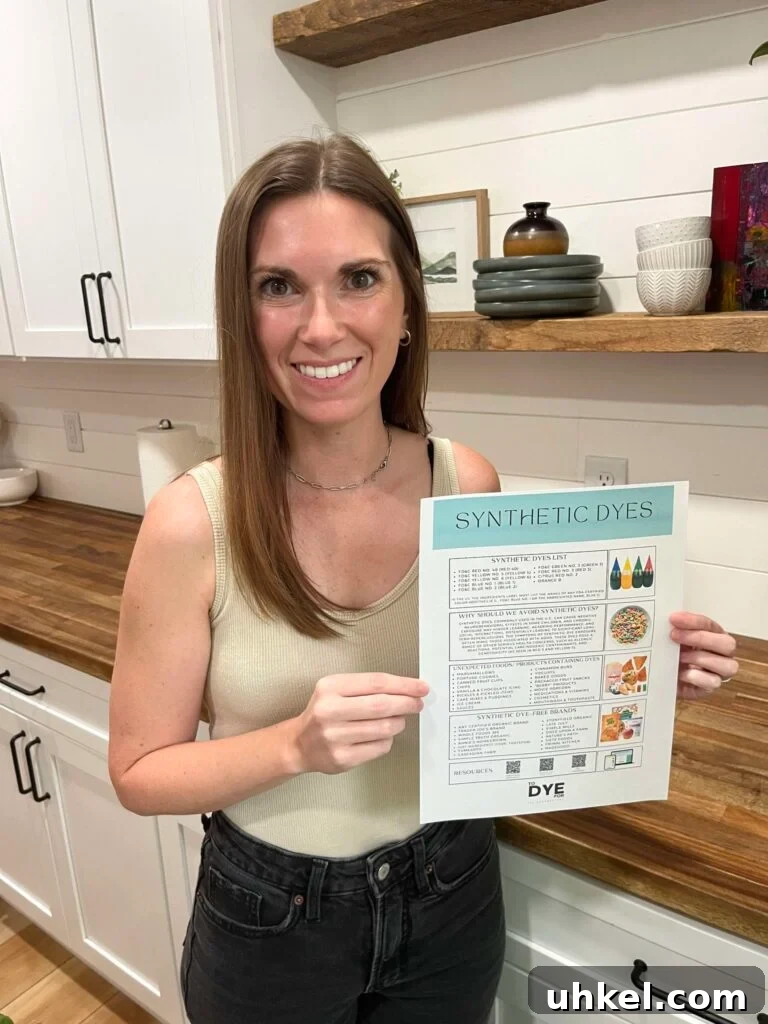 Parents-turned-filmmakers Brandon and Whitney Cawood embarked on a mission after discovering their child’s sensitivity to synthetic dyes. Their film, To Dye For: The Documentary, features interviews with experts and families and presents scientific context alongside personal stories. They aim to build awareness so families can identify and reduce exposure to additives that may affect behavior and health.