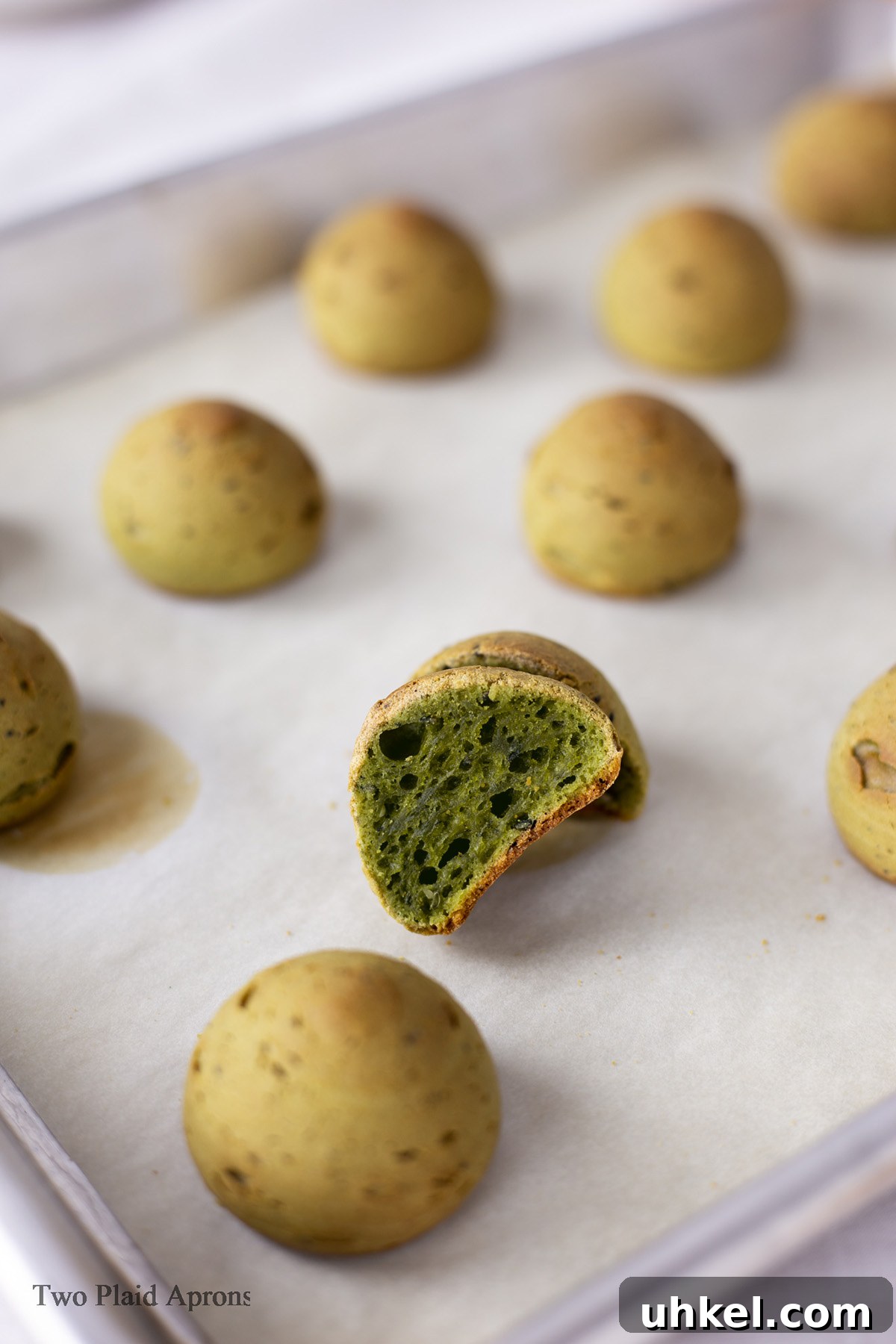
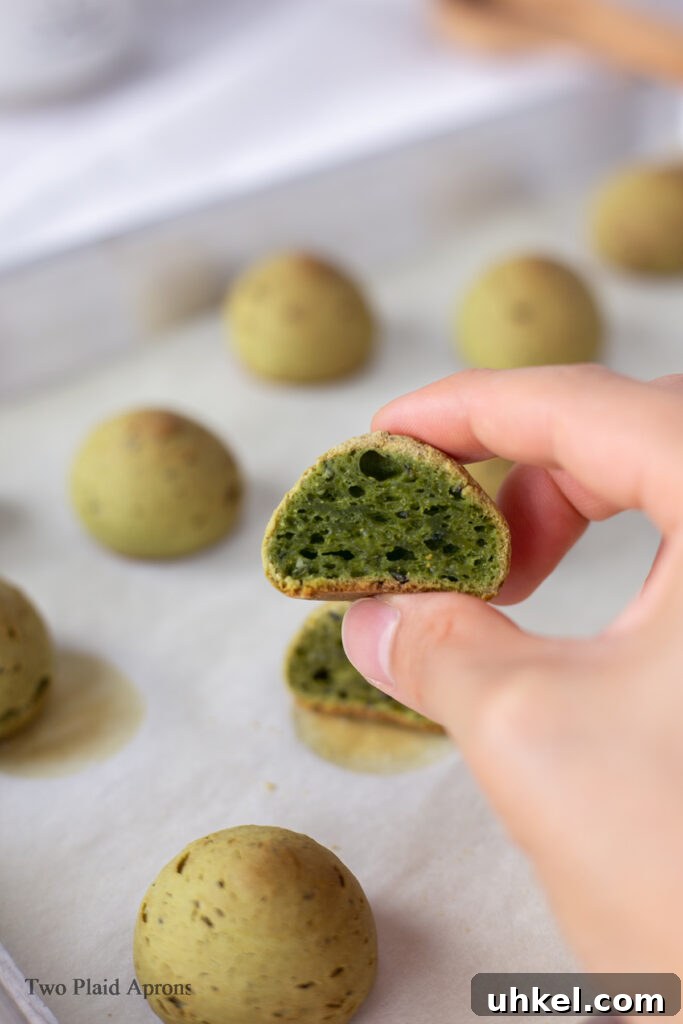
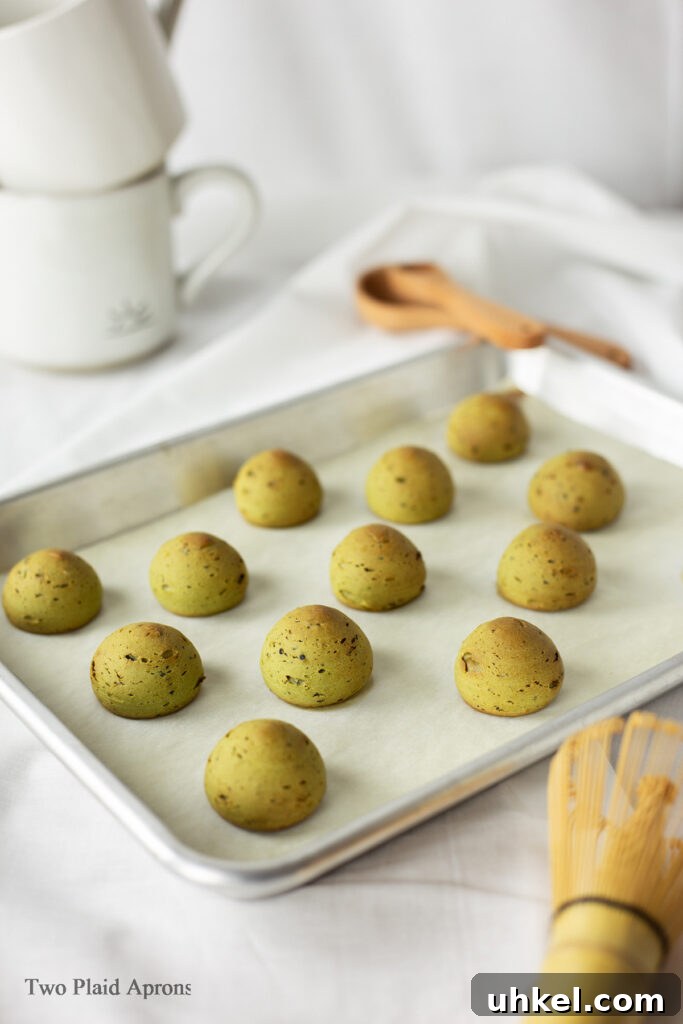
This matcha mochi bread recipe is a small-batch adaptation of our classic Korean mochi breads. Lightly speckled with black sesame seeds, these green-tinted “dino eggs” make an ideal afternoon or tea snack. They develop a slight crisp on the outside, remain tender and chewy inside, and carry delicate floral matcha notes with toasted black sesame.
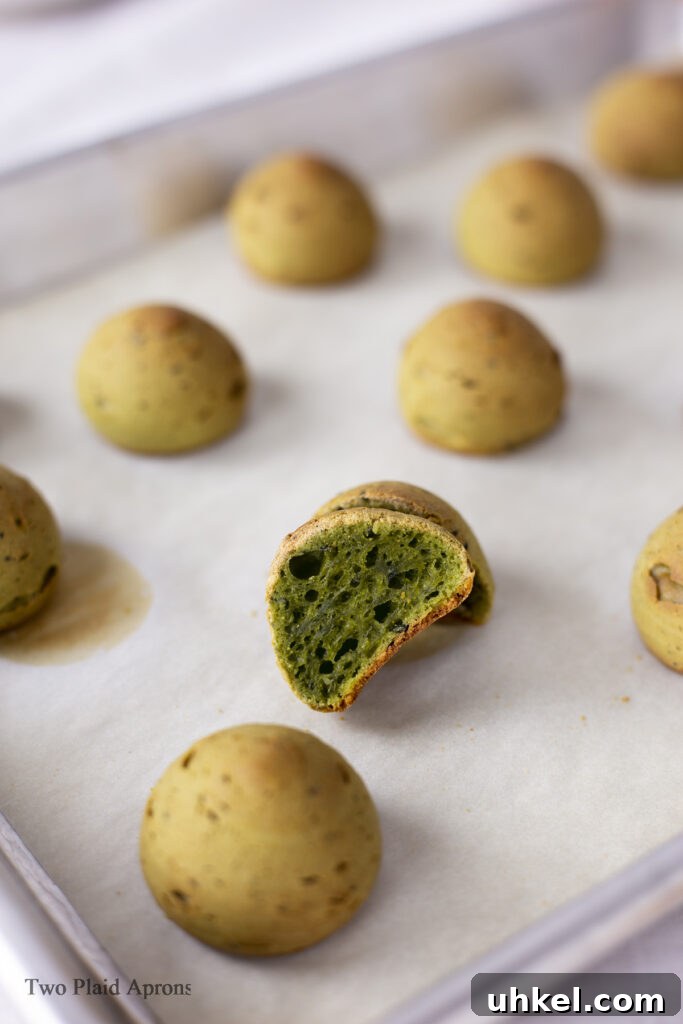
After sharing our original Korean mochi bread recipe last fall, many readers asked for flavored variations—matcha being a frequent request. We were excited to create this green, floral version of our favorite little “dino eggs.” The color adds a playful prehistoric vibe while the flavor stays light and refined.
We hope you enjoy this matcha twist on our cute mochi breads!
What makes mochi bread “mochi”
These matcha mochi breads get their chewy texture not from glutinous rice flour but from tapioca flour. That starch is what gives these buns their characteristic tender chew, distinguishing them from traditional rice-based mochi.
Use at least culinary-grade matcha
Good matcha matters here. A higher-quality culinary matcha yields a greener, more floral, less astringent flavor and maintains better color after baking. You don’t need ceremonial grade, but choose at least culinary-grade matcha for the best balance of flavor and color.
Bread flour or all-purpose flour
We tested both bread and all-purpose flour and found no major difference in the final result. Use whichever you have on hand—AP flour works fine and is convenient for most home bakers.
Initial batter consistency
After adding the flour and matcha to the hot milk mixture, the batter should thicken to a baby-food-like consistency. If it remains loose, the milk likely wasn’t hot enough—return the pan to medium heat and stir until it thickens.
Pâte à choux technique with a twist
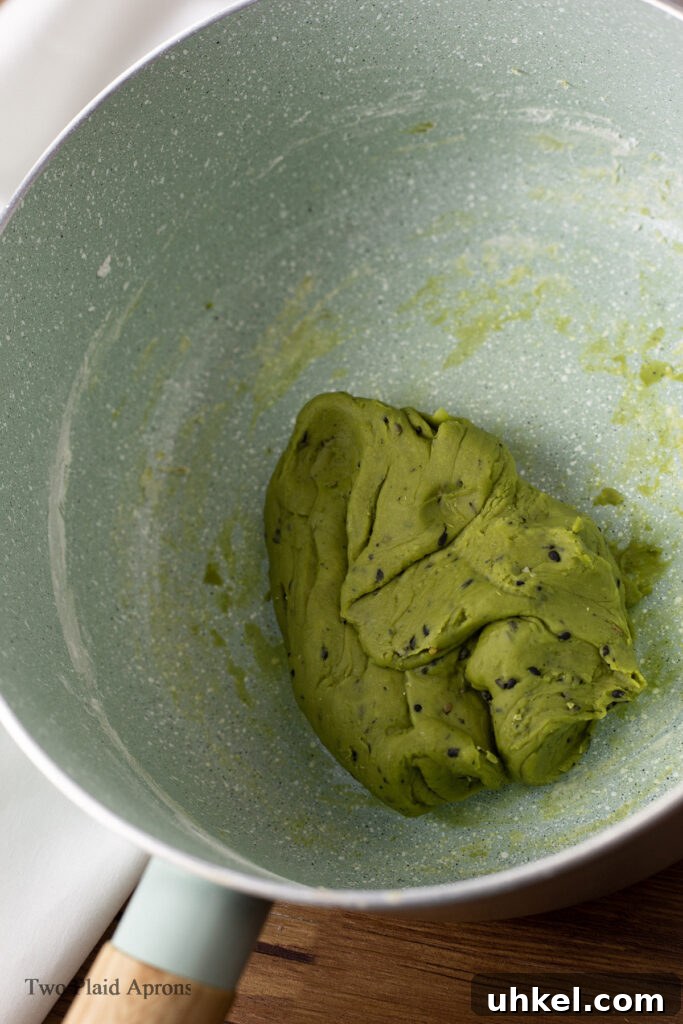
The method resembles pâte à choux: heat the milk, butter, sugar, salt, and flavoring, add the dry flour, then incorporate eggs to reach the final consistency. The main difference here is the delayed addition of tapioca flour. After the initial flour and matcha are incorporated and the mixture thickens, the tapioca flour is added to form a stiff dough. Eggs are then added gradually to loosen the dough into a pipeable batter.
-

After adding tapioca flour and incorporating it completely, the batter will be a stiff dough. -
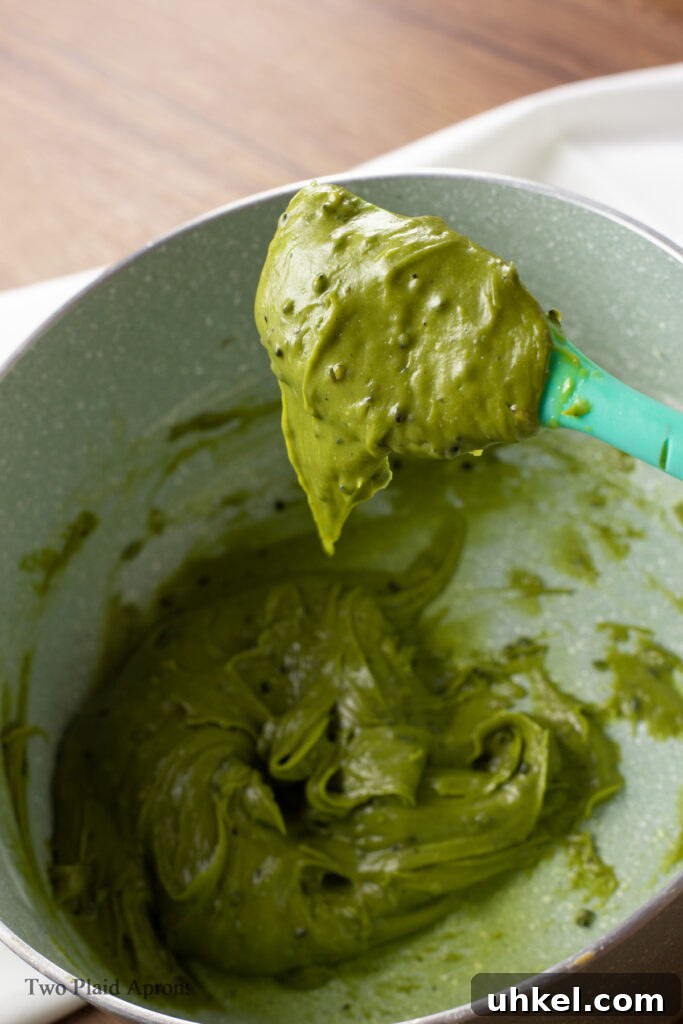
After adding the proper amount of eggs, the mochi bread batter becomes looser and hangs off the spatula in a “v” shape.
Proper consistency of the batter
When the tapioca is fully incorporated and the dough cools to warm, add beaten egg in small increments, fully mixing between additions. The batter is ready when it becomes thick but flows and forms a “V” or triangle when it drops from the spatula.
Piping tip
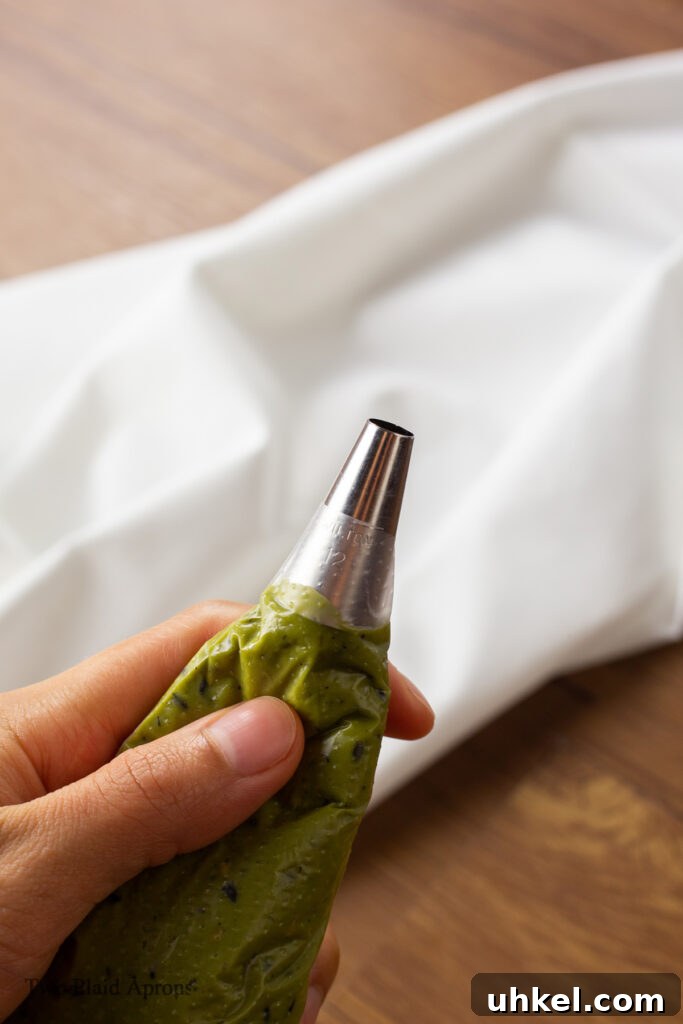
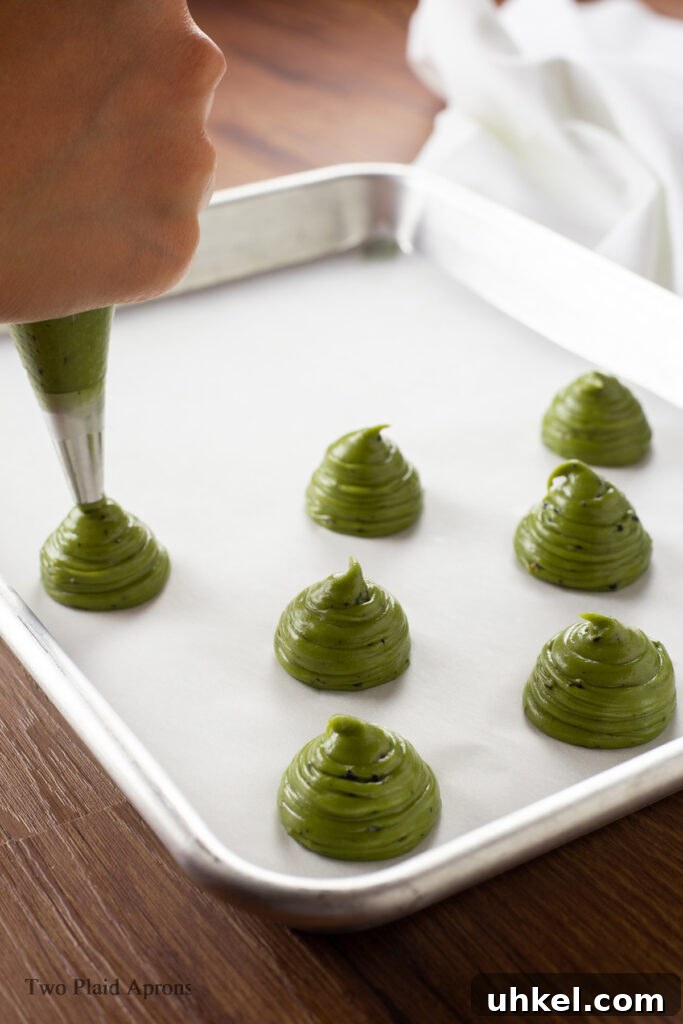
We recommend using a piping tip to shape the mounds. A round tip helps keep the pieces tall and evenly shaped. We used a Wilton #12 tip, but any round tip that produces roughly 1-inch mounds will work well.
Dab each mound with cold water
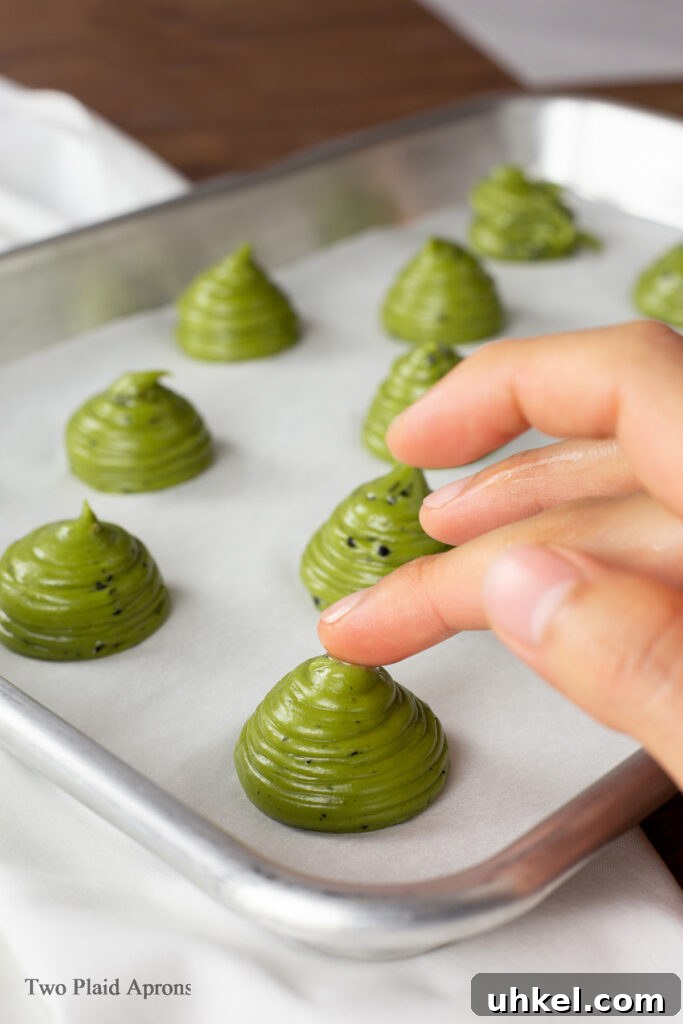
Before baking, wet your finger with cold water and gently smooth the tip of each piped dome. This prevents thin tips from browning or burning before the breads finish baking, keeping the tops nicely rounded.
Start with high-temperature baking
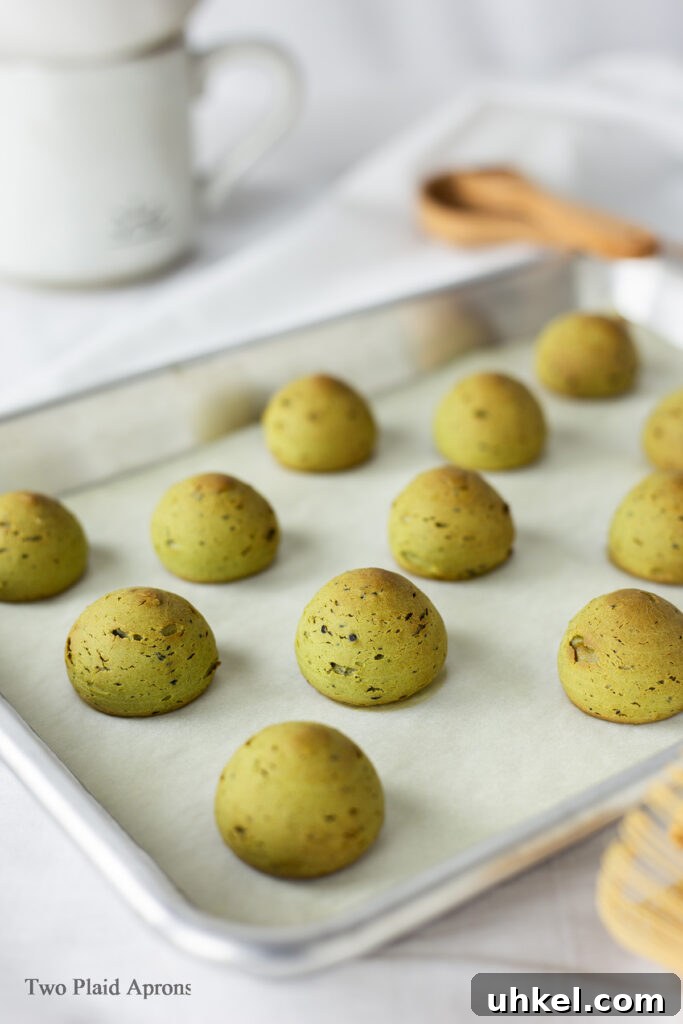
Begin baking at a higher temperature so the mochi breads puff up quickly and form the signature dome. Preheat the oven to 375°F and bake for about 10 minutes, then reduce the temperature to 350°F (without opening the oven) and bake another 10–15 minutes until slightly golden and firm on the outside. This two-stage bake helps achieve full rise without over-baking.
Matcha mochi bread on day two
These mochi breads are at their best the day they are baked: crisp outside and chewy inside. On day two they lose some crispness and may feel slightly stale. To revive the interior chewiness, store leftovers in an airtight container overnight. Before eating, lightly mist or sprinkle with water and microwave on a microwave-safe plate in short bursts (about 10–15 seconds) until warm. They will regain softness inside but won’t fully recover the original exterior crisp.
Alternative: bake from frozen for fresh results
For almost-fresh mochi breads on demand, pipe and smooth the mounds but don’t bake. Freeze them on the sheet pan, then transfer to a container. When ready to bake, place frozen piped mounds on a lined sheet and bake at 375°F about 5–10 minutes longer than the original initial bake, until fully puffed. Then lower the oven to 350°F and continue until slightly golden, about 10–15 more minutes.
If you enjoy Korean snacks and breads, try these:
- Korean mochi bread
- Sweet potato mochi pancakes / hotteok
- Korean sausage bread
- Korean french fry corn dog
Bake with love!
Mei ❤️
If you’ve made this recipe or any from our blog, please tag us on Instagram using #twoplaidaprons or mention @two_plaid_aprons in your stories. We love seeing your creations! 🥰
📖 Recipe
Matcha Mochie Bread
Ingredients
- 2 Tablespoons all-purpose flour (about 15g)
- 2 teaspoons matcha (culinary or better, about 3g)
- 1/3 cup milk (about 79 mL)
- 1 Tablespoon butter (about 15 g)
- 7 teaspoons granulated sugar (about 30 g)
- 1/4 teaspoon vanilla extract
- Pinch of salt
- 65 g tapioca flour (about 1/2 cup)
- 1 egg, beaten (you will likely use 1/2 to 2/3 of a large egg)
- 1 Tablespoon black sesame seeds (optional)
Instructions
- Preheat oven to 375°F. Line a sheet pan with parchment.
- Whisk together the all-purpose flour and matcha; set aside. Use at least culinary-grade matcha for best flavor and color.
- In a saucepan, bring milk, butter, sugar, salt, and vanilla to a simmer over medium heat, stirring occasionally. Turn off the heat, then add the flour–matcha mixture and black sesame seeds. Whisk until no dry flour remains and the mixture resembles thick baby food. If it’s too loose, return to medium heat and stir until thick.
- While the mixture is hot, add the tapioca flour and mix with a rubber spatula until fully absorbed and no dry spots remain. The dough will become stiff. Let it cool until warm to the touch.
- When warm, add beaten egg in small amounts (about 1/4 at a time), mixing fully between additions. The batter is ready when it loosens to a thick, pipeable consistency and forms a “V” when dropped from the spatula. You may not need the entire egg.
- Transfer batter to a piping bag fitted with a round tip (Wilton #12 works well) and pipe tall dome mounds about 1 inch wide and 1 inch tall, spaced at least 1 inch apart. Smear a bit of batter in the parchment corners to secure it to the pan.
- Dip a finger in cold water and gently smooth the tips of each mound to prevent premature browning.
- Bake at 375°F for about 10 minutes, then reduce oven temperature to 350°F and bake another 10–15 minutes until lightly golden and firm outside.
- Remove from oven and cool until comfortable to handle. Enjoy!
Notes
These are best the day they are baked. For leftovers, store in an airtight container. To revive the interior chewiness on day two, lightly mist with water and microwave in short bursts (about 10–15 seconds) until warm. The exterior will not regain full crispness.
Recommended Equipment
- Half sheet pan
- Piping bag and round tip
- Rubber spatula