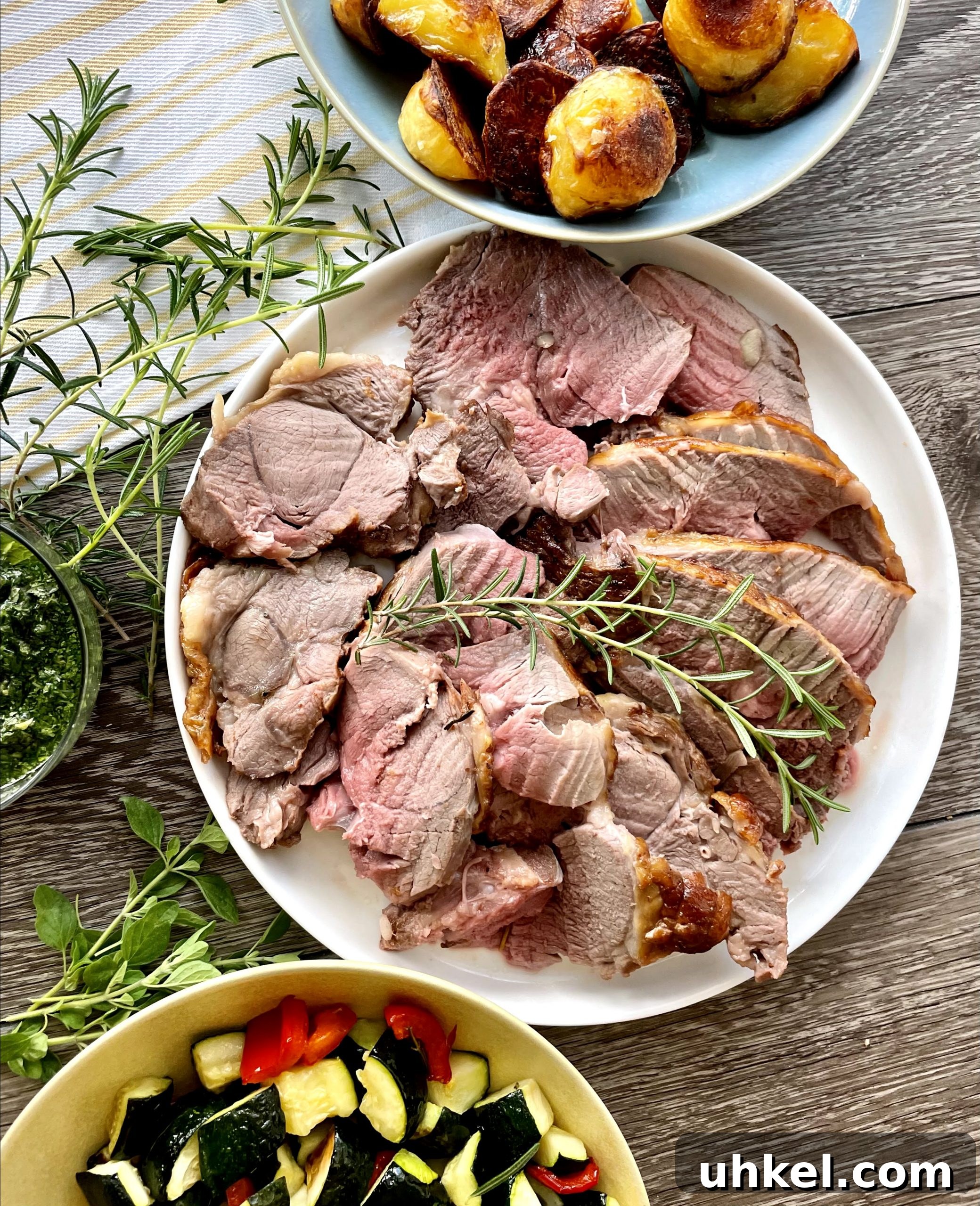
My family loves lamb. Growing up in South Africa, our Saturday lunches often featured roast leg of lamb with roast potatoes, brown gravy, fresh mint sauce and a beetroot salad. Today we tend to save lamb for Easter, and the holiday is full of family traditions. When the girls were little we colored eggs, attended church, had a family lunch, and enjoyed an Easter egg hunt plus a chocolate treat from the Easter bunny — always a Lindt bunny or a chocolate carrot. The girls still expect their Lindt chocolate, and this year one of them even organized an Easter egg hunt for her boyfriend.
Why lamb for Easter? For Christians, Easter commemorates Jesus rising from the dead after his crucifixion. Jesus is often referred to as the sacrificial lamb of God, a symbol that links lamb to the themes of sacrifice and new life celebrated at Easter.
The roast lamb recipe I use comes from my mother’s dressmaker, Mrs. Skafidas, a warm Greek woman who was as talented with a needle as she was in the kitchen. As a child I remember walking into her house with my mother and being greeted by the scent of roasting lamb, garlic, rosemary and oregano. Mrs. Skafidas taught us that many Mediterranean marinades are built on simple, high-quality ingredients — olive oil, lemon juice, garlic, rosemary, oregano, thyme, salt and pepper — which enhance the meat without masking its flavor. We still follow her method for our roast leg of lamb.
Tips for making roast leg of lamb.
Cuts of lamb.
The two main cuts for a lamb roast are the leg and the rack. The leg may be sold bone-in or boneless. If your butcher offers a bone-in leg, ask if they will debone it for you — many will. A boneless leg is usually packed in netting to keep the meat together and is easier to slice and serve. It’s somewhat less tender than a rack, but marinating with an acidic ingredient like lemon juice helps tenderize it.
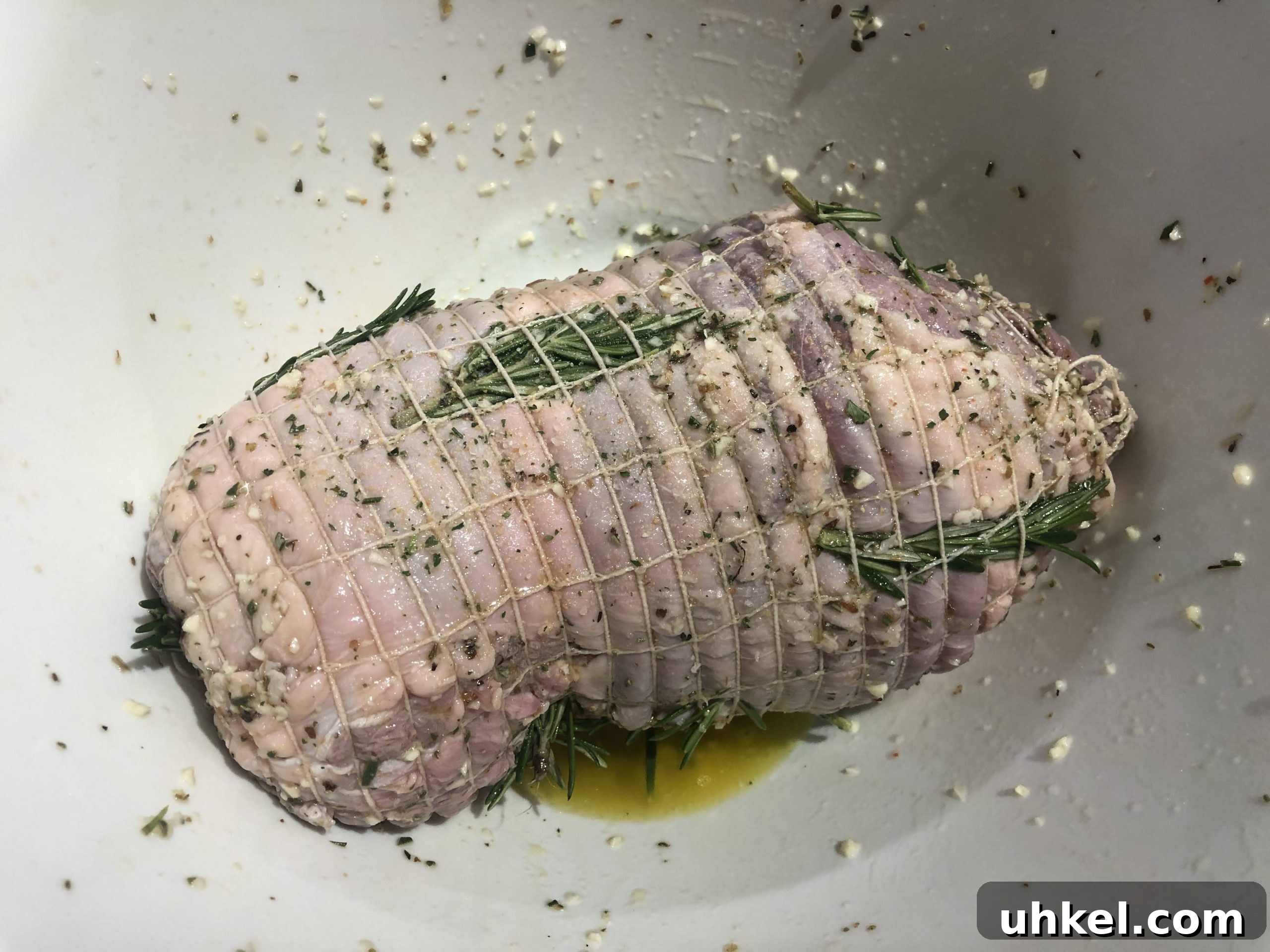
Boneless legs are typically netted so they hold their shape and slice neatly after roasting. They respond well to an acid-based marinade, which softens the fibers and adds flavor.
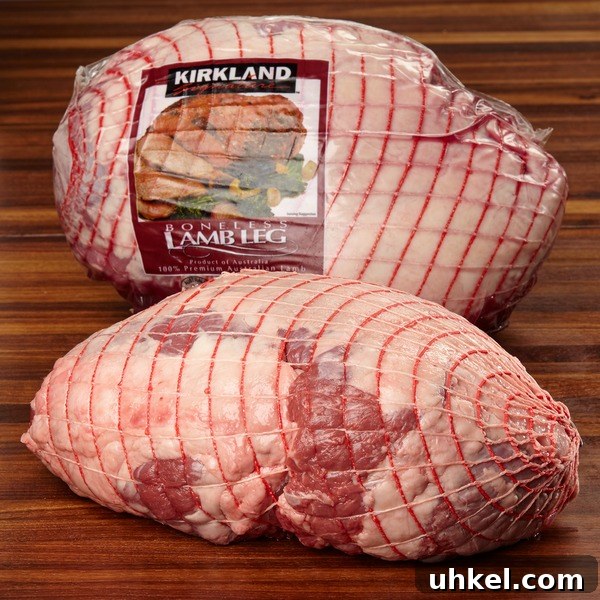
When you buy a boneless leg it will usually be in netting. To marinate more effectively, pull the netting back partway without cutting it so you can season and fill the interior, then pull the netting back over the meat afterward.
Boneless leg of lamb.
Before marinating, pull part of the netting down to expose the meat while keeping the net intact so you can easily pull it back over the leg. Insert slices or cloves of garlic into small incisions in the meat to infuse more flavor. These roasted garlic slivers mingle with the marinade and the meat as it cooks.
Garlic.
Garlic is a classic aromatic for lamb. Tucking slices or whole cloves into the meat lets the garlic flavor penetrate during marination and roasting.
Acid.
Acidic ingredients — lemon juice or vinegar — are commonly used in marinades because they help break down connective tissue and tenderize the meat. Leg of lamb benefits from this treatment: a lemon-based marinade softens the flesh while enhancing flavor. Be cautious with very prolonged exposure to strong acids, which can affect texture, but for a leg of lamb an overnight marinade is usually beneficial.
Marinating the leg of lamb.
For the best flavor and tenderness, marinate the leg of lamb for at least 24 hours. This allows the herbs, garlic and acidic marinade to penetrate the meat.
Roasting the leg of lamb.
Roast the lamb on a rack set over a shallow pan. Add a little water to the bottom of the pan to keep the meat moist and to prevent fat from smoking in the oven as it renders. If you roast on a BBQ, a rotisserie is ideal; otherwise create indirect heat by heating one side of the grill and placing the lamb on the cooler side so it cooks evenly. Grilling a large leg requires attention and occasional turning unless using a rotisserie.
Internal temperature.
Use an instant-read thermometer for best results. Aim for an internal temperature of about 135°F (57°C) before resting for medium-rare; the final temperature will rise slightly while the meat rests. Because leg is denser than a rack, its target temperature is slightly higher for the same doneness level.
Resting the roast leg of lamb.
After you remove the lamb from the oven, let it rest for 10 minutes. During this time the internal temperature will rise another 5–10°F and the juices will redistribute, resulting in a juicier, more tender roast.
BONELESS LEG OF LAMB ROAST
Equipment
- instant read / leave-in thermometer
Ingredients
- 1 boneless lamb leg (approx 5 lbs.)
- 3 cloves fresh garlic, sliced
- 2 lemons, juiced
- 1/3 cup olive oil
- 4 cloves fresh garlic (for the marinade), finely chopped
- 2 tbsp fresh oregano leaves, chopped
- 1 tbsp fresh rosemary, chopped
- 1 tsp fresh thyme
- 2 tsp coarse sea salt
- 1/2 tsp freshly ground black pepper
Instructions
Make the marinade
- In a bowl, combine the lemon juice and olive oil, whisking to emulsify.
- Finely chop the garlic (reserve the sliced garlic for inserting into the meat), rosemary and oregano, then stir them into the lemon-olive oil mixture.
- Season with sea salt and freshly ground black pepper and mix well.
Or prepare the marinade with a hand blender
- Blend the olive oil and lemon juice until emulsified.
- Add the chopped herbs and garlic, blend briefly, then season with salt and pepper and blend to incorporate.
Prepare the lamb
- Rinse the lamb and pat dry with paper towels.
- Pull part of the netting back to expose the meat without cutting it.
- Tuck the sliced garlic throughout the meat, inserting slices into small incisions if possible.
- Pour half the marinade over the exposed meat and work it in with your hands until well coated.
- Pull the netting back over the leg to reassemble it, place the lamb in a large freezer bag or bowl, add the remaining marinade, and ensure all surfaces are coated.
- Marinate the lamb overnight in the refrigerator for best results.
Roasting
- Remove the lamb from the refrigerator and let it come to room temperature for about 1 hour before roasting.
- Preheat the oven to 400°F (204°C).
- If using a leave-in thermometer probe, insert it into the thickest part of the lamb.
- Start roasting at 400°F (204°C) for 20 minutes to brown the exterior.
- Reduce the oven to 350°F (177°C) and continue roasting until the internal temperature reaches about 135°F (57°C) for medium-rare. Cooking time will vary with roast size.
- When the thermometer reads 135°F (57°C), remove the lamb from the oven and let it rest for 10 minutes before carving and serving.
Nutrition
Calories: 716 kcal
Carbohydrates: 4 g
Protein: 38 g
Fat: 60 g