
The first time my mother-in-law was diagnosed with type 2 diabetes, breakfast became the toughest meal. She’d grown up on toast and jam, sweet chai, and a bowl of cereal — a carb-heavy morning routine that sent her glucose monitor spiking by mid-morning. The crash afterward left her dizzy, irritable, and ravenous. Helping her redesign breakfast taught me more about stable, diabetes-friendly eating than any cookbook: the trick isn’t deprivation but rebuilding the meal around protein, fiber, and healthy fats first, with carbohydrates as a supporting component.
If you want breakfasts that keep blood sugar steady, this collection is for you. These 20 diabetic-friendly breakfast ideas are the recipes I rotate for family, friends with prediabetes, and for myself when I need a morning that won’t crash. Each entry includes a short time estimate, carb and protein counts, fiber, and a “best for” tag so you can quickly pick a recipe that fits your morning. Quantities are written for one serving unless noted, and most recipes scale easily.
Table of Contents
What Makes a Good Diabetic Breakfast?
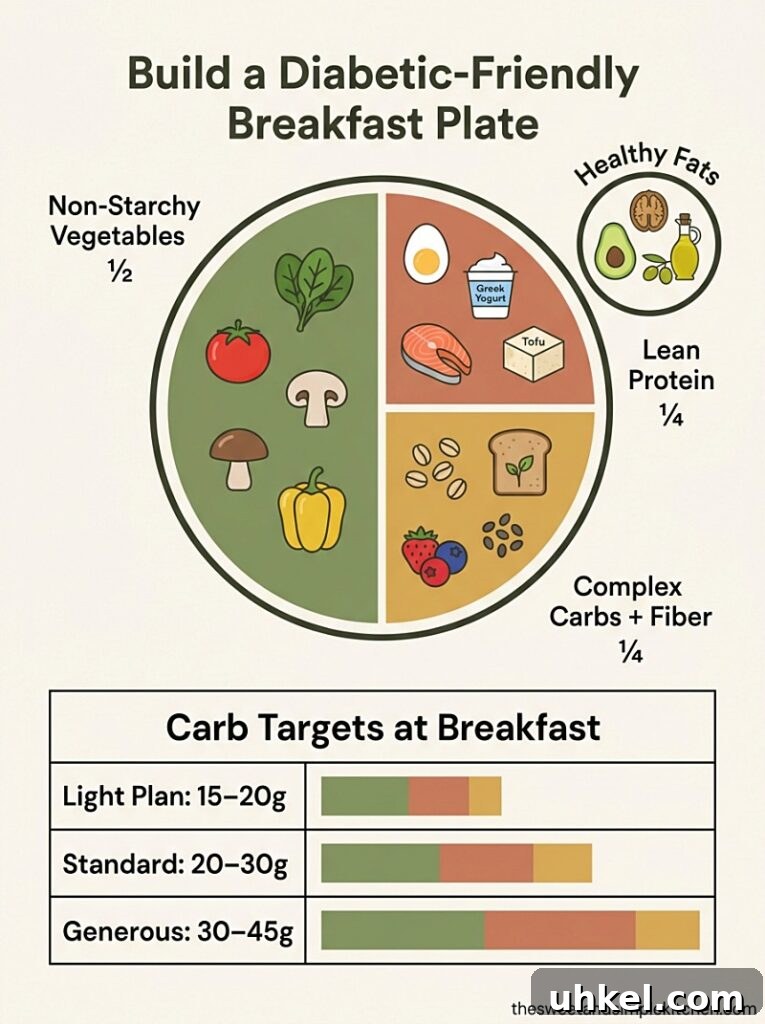
A diabetes-friendly breakfast typically pairs about 15–30 grams of complex carbohydrates with at least 15–20 grams of protein, plus a serving of healthy fat and 5+ grams of fiber. That combination slows glucose absorption, keeps you satisfied longer, and prevents the spike-and-crash cycle caused by refined carbs. Foods that form the backbone of these breakfasts include eggs, Greek yogurt, cottage cheese, oats, chia, nuts, seeds, and non-starchy vegetables.
| Category | Target |
|---|---|
| Carbs per meal | 15–30 g (mostly complex / high-fiber) |
| Protein per meal | 15–25 g minimum |
| Fiber per meal | 5+ g |
| Added sugar | Under 6 g |
| Sodium | Under 500 mg |
| Calories | 300–500 (adjust to your plan) |
How to Read This List
Each recipe shows time, carbs, protein, fiber, and a “best for” tag so you can scan and choose quickly. Most recipes are written for one serving and scale 1:1 for two or four people. Many are make-ahead friendly or ready in under 10 minutes, because the best plan is one you’ll actually follow.
How I Picked These 20 Recipes
Every recipe meets four standards: 30 grams or fewer net carbs per serving, at least 15 grams of protein (unless noted for specific low-carb snacks), a measurable fiber contribution, and no refined sugars added. I favored make-ahead and quick options because convenience is critical — a good diabetic breakfast is the one you will actually eat on busy mornings.
The 20 Best Diabetic Breakfast Ideas
1. Spinach and Feta Scrambled Eggs
⏱ 5 min · 2g carbs · 18g protein · 1g fiber · Best for: rushed weekdays
Heat 1 teaspoon olive oil in a nonstick pan over medium-low. Wilt 1 cup fresh spinach for about 60 seconds. Whisk 2 eggs with salt and pepper and cook slowly until soft curds form. Fold in 1 tablespoon crumbled feta off the heat. For creamier, higher-protein eggs, whisk in 1 tablespoon cottage cheese before cooking to raise protein to about 22g.
2. Overnight Vanilla Chia Pudding With Berries
⏱ 5 min active + overnight · 14g carbs · 9g protein · 12g fiber · Best for: meal prep
Stir 3 tablespoons chia seeds with ¾ cup unsweetened almond milk, ½ teaspoon vanilla, and a pinch of cinnamon. Whisk, let sit 10 minutes, whisk again, then refrigerate overnight. In the morning, top with ½ cup mixed berries and 1 tablespoon slivered almonds. Soluble fiber in chia forms a gel that slows sugar absorption.
3. Greek Yogurt and Berry Parfait
⏱ 3 min · 18g carbs · 18g protein · 6g fiber · Best for: 5-minute mornings
Layer ¾ cup plain Greek yogurt (2% or full-fat) with ½ cup mixed berries, 2 tablespoons chopped walnuts, and 1 teaspoon ground flaxseed. Add ¼ teaspoon vanilla or a pinch of cinnamon for extra flavor without carbs. This breakfast provides protein and healthy fats while keeping added sugars low.
4. Savory Cottage Cheese Breakfast Bowl
⏱ 4 min · 8g carbs · 22g protein · 2g fiber · Best for: low-carb days
Spoon ¾ cup low-sodium cottage cheese into a bowl and top with ½ a sliced cucumber, 6 halved cherry tomatoes, 4 kalamata olives, 1 teaspoon olive oil, and everything bagel seasoning. Fresh, savory, and high in protein for a filling start.
5. Steel-Cut Oatmeal With Cinnamon and Walnuts
⏱ 20 min stovetop or 7 min Instant Pot · 27g carbs · 9g protein · 6g fiber · Best for: cold mornings
Simmer ¼ cup steel-cut oats in 1 cup water until creamy (about 18–20 minutes). Top with ½ teaspoon cinnamon, 2 tablespoons chopped walnuts, ¼ cup blueberries, and a splash of unsweetened almond milk. Steel-cut oats have a lower glycemic response than instant oats.
6. Avocado Toast With Egg on Sprouted Grain Bread
⏱ 7 min · 22g carbs · 12g protein · 8g fiber · Best for: weekend mornings
Toast a slice of sprouted whole-grain bread. Mash ¼ ripe avocado on the toast and season with lemon, salt, and red pepper flakes. Top with a fried egg. Sprouted grain bread often has a lower glycemic impact than standard whole wheat.
7. Smoked Salmon Plate
⏱ 3 min · 12g carbs · 22g protein · 2g fiber · Best for: brunch impressions
Arrange 3 ounces smoked salmon with 2 tablespoons whipped cream cheese or labneh, ½ sliced cucumber, 1 tablespoon capers, fresh dill, and half a toasted whole-grain English muffin. Lemon brightens the plate and the protein and omega-3s support heart health.
8. Make-Ahead Vegetable Frittata
⏱ 30 min · 4g carbs · 14g protein · 2g fiber · Best for: Sunday meal prep (6 servings)
Sauté 1 cup spinach, ½ cup sliced mushrooms, and ½ cup diced bell pepper in 1 tablespoon olive oil. Whisk 8 eggs with ¼ cup milk, salt, and pepper; pour over vegetables, sprinkle ½ cup grated cheddar, and bake at 375°F for 18–20 minutes. Cut into 6 wedges that refrigerate well for weekday breakfasts.
9. Tofu Scramble With Turmeric and Black Beans
⏱ 10 min · 14g carbs · 20g protein · 8g fiber · Best for: plant-based mornings
Crumble 7 oz firm tofu into a hot pan with 1 tablespoon olive oil. Season with ½ teaspoon turmeric, ½ teaspoon garlic powder, and a pinch of black salt for an eggy flavor. Cook 5 minutes, stir in ¼ cup warmed black beans and baby spinach, and top with salsa.
10. Almond Flour Pancakes
⏱ 15 min · 9g carbs · 18g protein · 5g fiber · Best for: weekend low-carb cravings (makes 6 / serves 2)
Combine 1 cup almond flour, 2 eggs, ¼ cup unsweetened almond milk, 1 teaspoon baking powder, ½ teaspoon vanilla, and a pinch of salt. Cook small pancakes over medium-low and top with berries and a teaspoon of pure maple syrup if desired.
11. Make-Ahead Crustless Mini Quiches
⏱ 30 min · 3g carbs · 14g protein · 1g fiber · Best for: grab-and-go meal prep (makes 12 / serves 6)
Grease a 12-cup muffin tin and divide 1 cup chopped spinach, ½ cup diced ham or turkey sausage, ½ cup shredded cheddar, and ¼ cup diced bell pepper among the cups. Whisk 8 eggs with ½ cup milk and seasoning, pour evenly, and bake at 350°F for 22–25 minutes. These reheat quickly and freeze well.
12. Cauliflower Hash Browns With Fried Eggs
⏱ 20 min · 8g carbs · 22g protein · 4g fiber · Best for: low-carb diner cravings
Drain 12 oz riced cauliflower in a towel until mostly dry. Mix with 1 egg, ¼ cup grated parmesan, ¼ cup almond flour, and seasonings. Form into patties and pan-fry in 1 tablespoon olive oil until golden. Top with two fried eggs and hot sauce.
13. Shakshuka
⏱ 25 min · 18g carbs · 18g protein · 5g fiber · Best for: weekend brunch for two
Sauté 1 chopped onion, 1 diced bell pepper, and 3 garlic cloves in 2 tablespoons olive oil. Add 1 teaspoon cumin, 1 teaspoon paprika, ½ teaspoon cayenne, and a 28-oz can crushed tomatoes. Simmer until thick, make wells, crack in eggs, cover, and cook until whites set. Garnish with feta and cilantro and serve with a small wedge of whole-grain pita.
14. Natural Peanut Butter on Sprouted Toast With Banana
⏱ 5 min · 28g carbs · 11g protein · 7g fiber · Best for: pre-workout fuel
Toast sprouted whole-grain bread and spread 2 tablespoons natural peanut butter. Top with ½ a small banana sliced thin, chia seeds, and cinnamon. The fat and protein in the peanut butter help slow the banana’s sugars.
15. Berry Avocado Protein Smoothie
⏱ 4 min · 16g carbs · 28g protein · 11g fiber · Best for: post-gym refuel
Blend 1 cup unsweetened almond milk, ½ cup frozen mixed berries, ½ small avocado, 1 tablespoon chia seeds, 1 scoop unsweetened protein powder (about 25g), 1 cup spinach, and ice. Avocado provides creaminess with far fewer carbs than banana.
16. Black Bean and Egg Breakfast Burrito
⏱ 10 min · 26g carbs · 22g protein · 9g fiber · Best for: substantial weekend breakfast
Scramble 2 eggs and layer them on a low-carb whole-wheat tortilla with ¼ cup warmed black beans, 2 tablespoons salsa, 2 tablespoons shredded pepper jack, and baby spinach. Roll and sear seam-side down briefly to set the wrap.
17. Zucchini and Cheddar Egg Bites
⏱ 35 min · 2g carbs · 13g protein · 1g fiber · Best for: meal prep snacks (makes 12 / serves 6)
Blend 6 eggs with ¼ cup cottage cheese, ¼ cup shredded cheddar, salt, and pepper. Fold in 1 cup grated zucchini (squeezed dry). Pour into a greased 12-cup silicone muffin tin set in a water bath and bake at 300°F for about 25 minutes until just set.
18. Apple-Cinnamon Baked Oatmeal_Cups
⏱ 35 min · 18g carbs · 6g protein · 4g fiber · Best for: family meal prep (makes 12)
Mix 2 cups rolled oats with 1 teaspoon cinnamon, ½ teaspoon baking powder, and salt. Whisk 2 cups unsweetened almond milk, 2 eggs, ¼ cup unsweetened applesauce, 1 teaspoon vanilla, and 1 grated apple. Portion into a muffin tin and bake at 375°F for about 22 minutes.
19. Homemade Turkey Breakfast Sausage With Avocado
⏱ 15 min · 4g carbs · 24g protein · 3g fiber · Best for: when you crave a “diner” breakfast
Mix 1 lb ground turkey with sage, thyme, fennel seeds, salt, pepper, and red pepper flakes. Form into 8 patties and pan-sear in 1 teaspoon olive oil until cooked through. Serve two patties with half an avocado and roasted cherry tomatoes for a classic plate without processed meat additives.
20. Buckwheat Porridge With Seeds and Berries
⏱ 20 min · 24g carbs · 12g protein · 7g fiber · Best for: trying something new
Toast ½ cup raw buckwheat groats briefly, add 1½ cups unsweetened almond milk and a pinch of salt, and simmer 12–15 minutes until tender. Top with 1 tablespoon pumpkin seeds, 1 tablespoon hemp hearts, ¼ cup raspberries, and cinnamon for a gluten-free, nutrient-dense porridge.
A Sample 3-Day Rotation
Here’s a simple mix of make-ahead and quick-assemble breakfasts to get started:
| Day | Breakfast | Why |
|---|---|---|
| Monday | Vegetable Frittata wedge (made Sunday) + ½ cup berries | Protein-loaded, zero morning effort |
| Tuesday | Overnight Vanilla Chia Pudding (prepped Monday night) | High-fiber, grab-and-go |
| Wednesday | Spinach & Feta Scrambled Eggs + half an avocado | Hot, fresh, ready in minutes |
Repeat or rotate weekend plans with one batch-cooked anchor (frittata, mini quiches, baked oatmeal cups), one make-ahead jar (chia pudding or pre-portioned smoothie ingredients), and a couple quick fresh plates (eggs, cottage cheese bowl, avocado toast).
Pro Tips for Steady Morning Blood Sugar
Eat protein first. Eating protein and vegetables before carbohydrates can reduce post-meal glucose spikes. If you include toast, eat some eggs or yogurt first.
Pair, don’t pick. Fruit alone can spike blood sugar; pair it with nuts, seeds, or protein to moderate the effect.
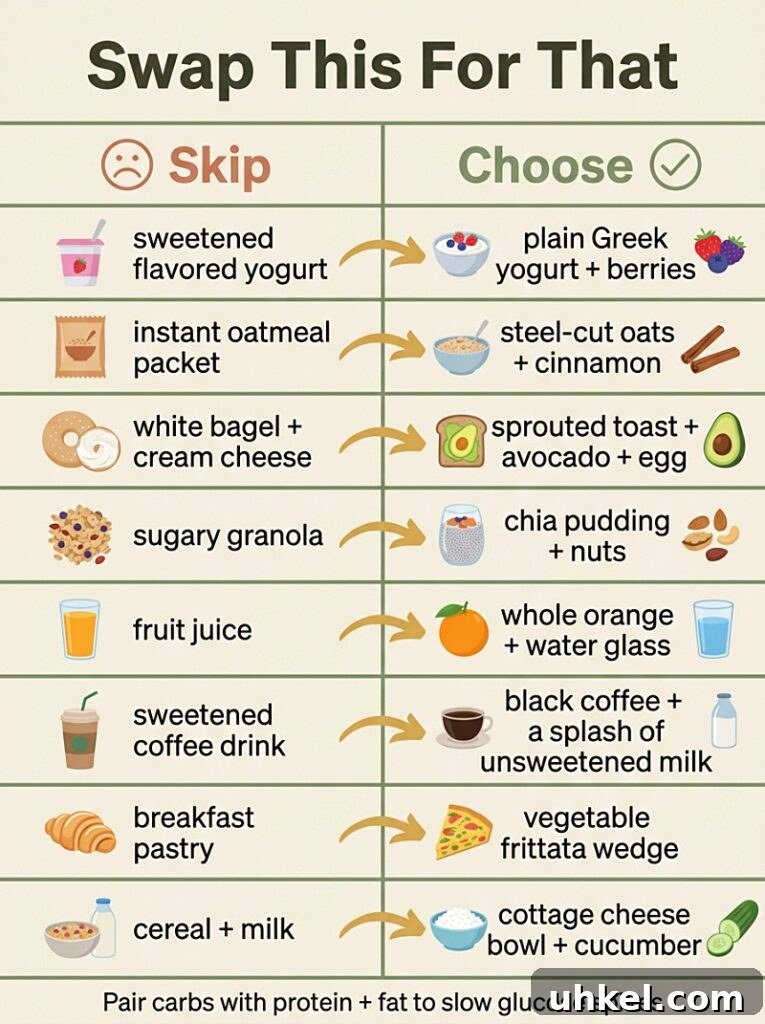
Beware “healthy” traps. Many granolas, flavored yogurts, sweetened milks, and store-bought bars hide high sugar. Read the Nutrition Facts for accurate carbohydrate and sugar content.
Hydrate before caffeine. Dehydration can concentrate glucose; a glass of water before coffee can help.
Test and personalize. If you use a continuous glucose monitor, track how each breakfast affects you. The same food can affect people differently, so adjust based on your response.
Common Mistakes With Diabetic Breakfasts
A common error is going low-carb but also low-protein. If you remove toast, replace it with meaningful protein and vegetables. Another pitfall is trusting front-of-package claims — flip the label to check sugars and carbs. Finally, avoid drinking too many carbs: large smoothies or sweetened coffee drinks can pack 50–60+ grams of carbs that hit quickly. If you enjoy smoothies, anchor them with protein powder and chia and limit fruit to one cup or less, preferably berries.
Frequently Asked Questions
What is the best breakfast for type 2 diabetes?
There’s no single best choice. The ideal breakfast combines lean protein, complex high-fiber carbs, and healthy fats while keeping total carbs near 30 g or less. Vegetable omelets, Greek yogurt with berries and nuts, chia pudding, and avocado toast on sprouted bread are consistently good options. Personalization matters most.
Can diabetics eat eggs every day?
Yes. Eggs are low in carbs and provide high-quality protein. For most people, dietary cholesterol from eggs has minimal effect on blood cholesterol, but if you have specific health concerns, discuss egg intake with your healthcare provider.
Is oatmeal good for diabetics?
Oatmeal can be an excellent choice when you pick steel-cut or old-fashioned rolled oats, control portion size (¼–½ cup dry), cook with water or unsweetened milk, and pair with protein and healthy fat. Avoid instant flavored packets that spike blood sugar quickly.
What breakfast foods should diabetics avoid?
Avoid sugary cereals, flavored yogurts, pastries, donuts, fruit juice, sweetened coffee drinks, most granolas, and many store-bought breakfast bars. These are high in refined carbs and low in protein and fiber, producing rapid blood sugar spikes.
Can I make these diabetic breakfast recipes ahead of time?
Yes. Many recipes — chia pudding, frittata, mini quiches, egg bites, baked oatmeal cups, and homemade turkey sausage — keep well in the fridge for 4–5 days and can be frozen for longer storage. Batch-cooking on the weekend saves time and helps you stay consistent during the week.
What’s a quick diabetic breakfast on the go?
Good options include hard-boiled eggs with a handful of almonds, plain Greek yogurt with berries, single-serve cottage cheese with seasoning, a chia pudding jar, or two homemade egg bites with an apple. Aim for 15+ grams protein and under 30 grams carbs.
How much fiber should I aim for at breakfast?
The recommendation for adults is generally 25–30 g of fiber per day, with a good portion coming from soluble fiber. Hitting 7–10 g at breakfast using chia, berries, oats, and nuts sets you up well for the day.
Final Thoughts
A well-composed breakfast can be one of the most effective tools to keep blood sugar steady all day. You don’t need specialty ingredients or long prep times. Pick a few favorites from this list, batch-prep two on the weekend, and rotate the rest. Over time you’ll discover which breakfasts work best for your body and schedule.
If you try any of these ideas, note how they affect your energy and blood sugar so you can refine your personal rotation.