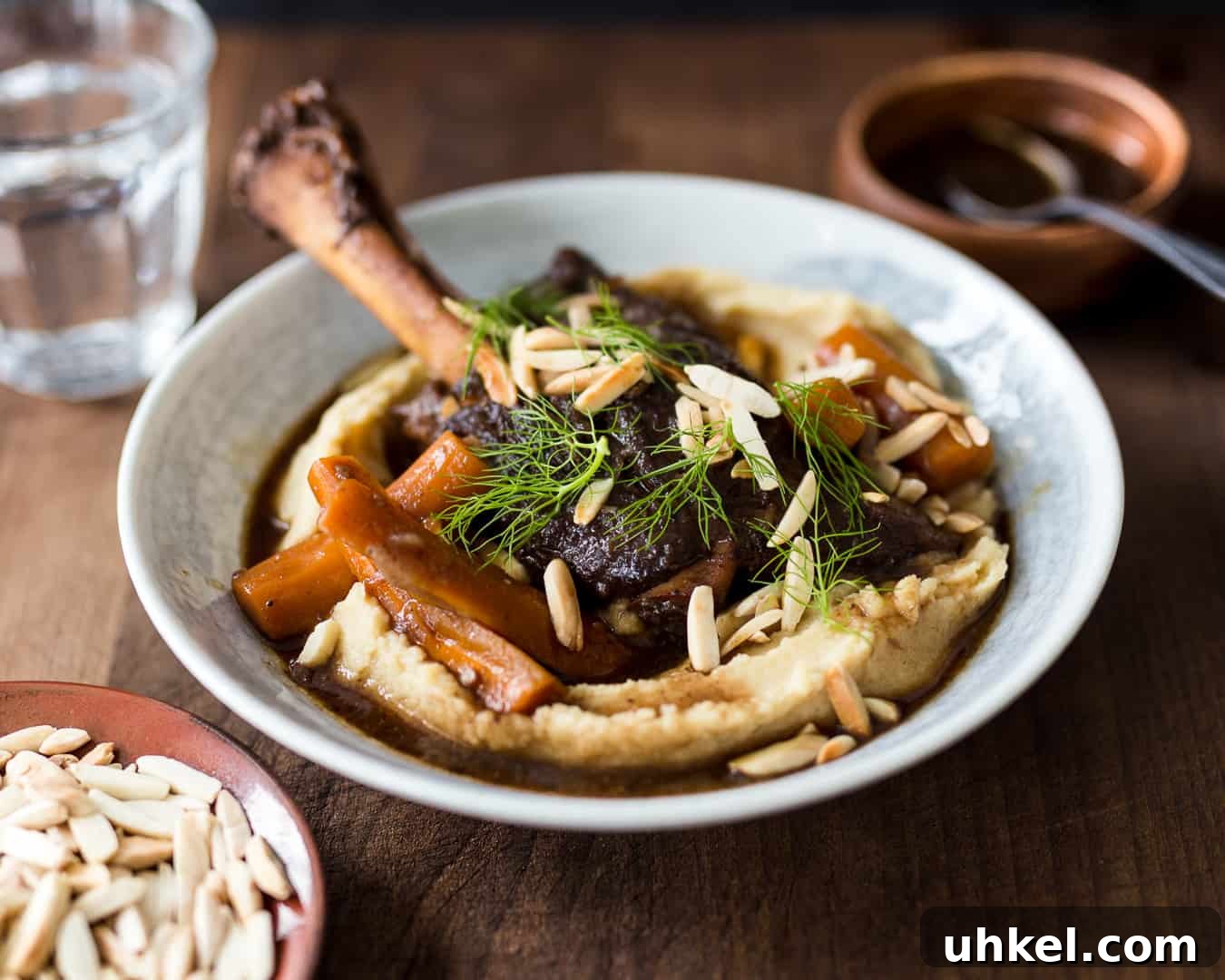
The secret to these spiced lamb shanks is ras el hanout, a rich and complex North African spice blend most commonly associated with Morocco. Traditionally assembled by spice merchants from their finest ingredients, ras el hanout literally means “head of the shop” — the best of the best. Every blend varies, but it typically features warm, earthy notes like cinnamon, clove, nutmeg, ginger and allspice. Some blends can include dozens of spices, depending on the recipe or the shop that made it.
Years ago, during a brief visit to northern Morocco, I remember wandering through Tangier’s medina and sampling spices in local shops. The spice stalls stood out more than the lunch that day, and I brought home a few bags labeled for different uses — “spice for chickens” and “spice for beefs.” I didn’t learn the name ras el hanout until later, though one of those mixes may well have been it.
This past summer I unexpectedly found a bottle of ras el hanout while traveling in Romania and decided to make these spiced lamb shanks. The results were excellent: the warm spice tones paired beautifully with pomegranate juice for a balanced sweet-tart contrast, and aromatic vegetables added depth to the meat and sauce.
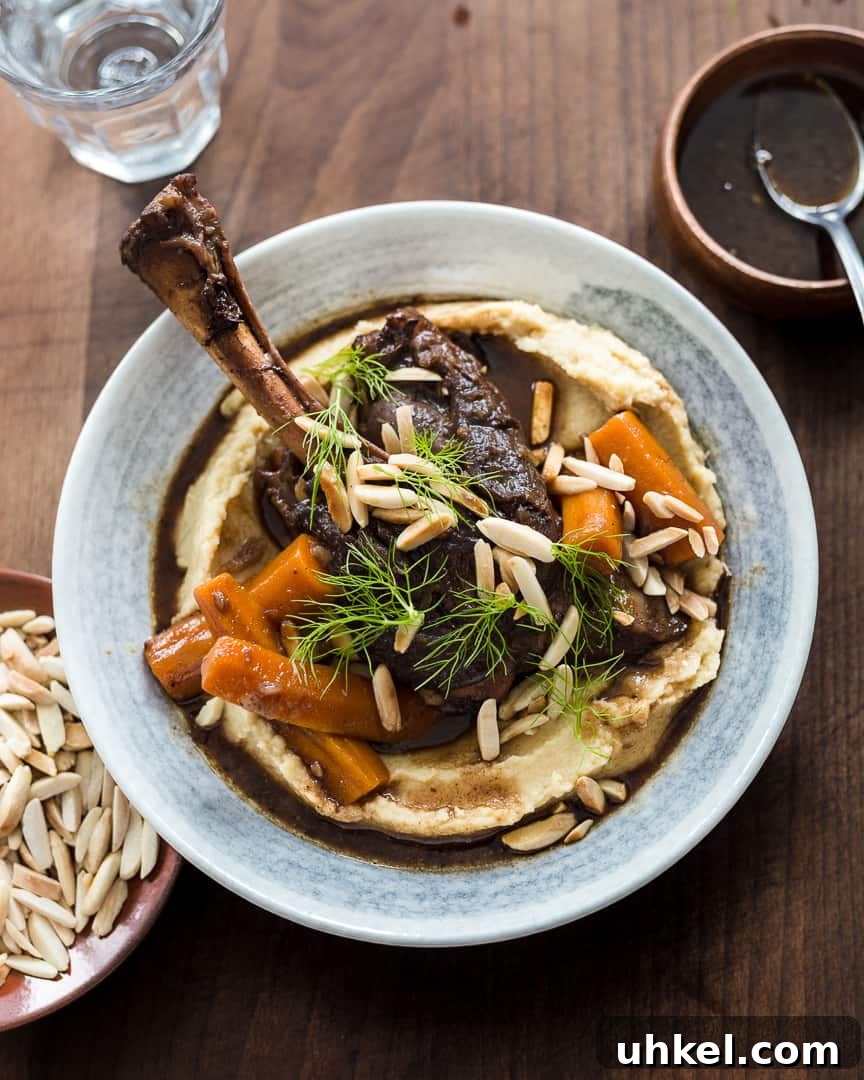
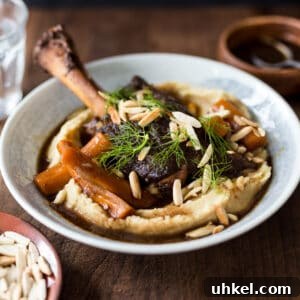
I plated the shanks over a creamy cauliflower purée that soaked up the reduced sauce like a velvety sponge, and finished the dish with toasted slivered almonds for a pleasant crunch. To speed the process I used an electric pressure cooker, which drastically reduces cook time while delivering tender meat. If you prefer, the same recipe can be made in a Dutch oven — the oven’s dry heat allows some liquid to evaporate and concentrate, which can enhance flavor. The pressure-cooker method keeps more moisture inside, so you will want to reduce the sauce after cooking to concentrate it.
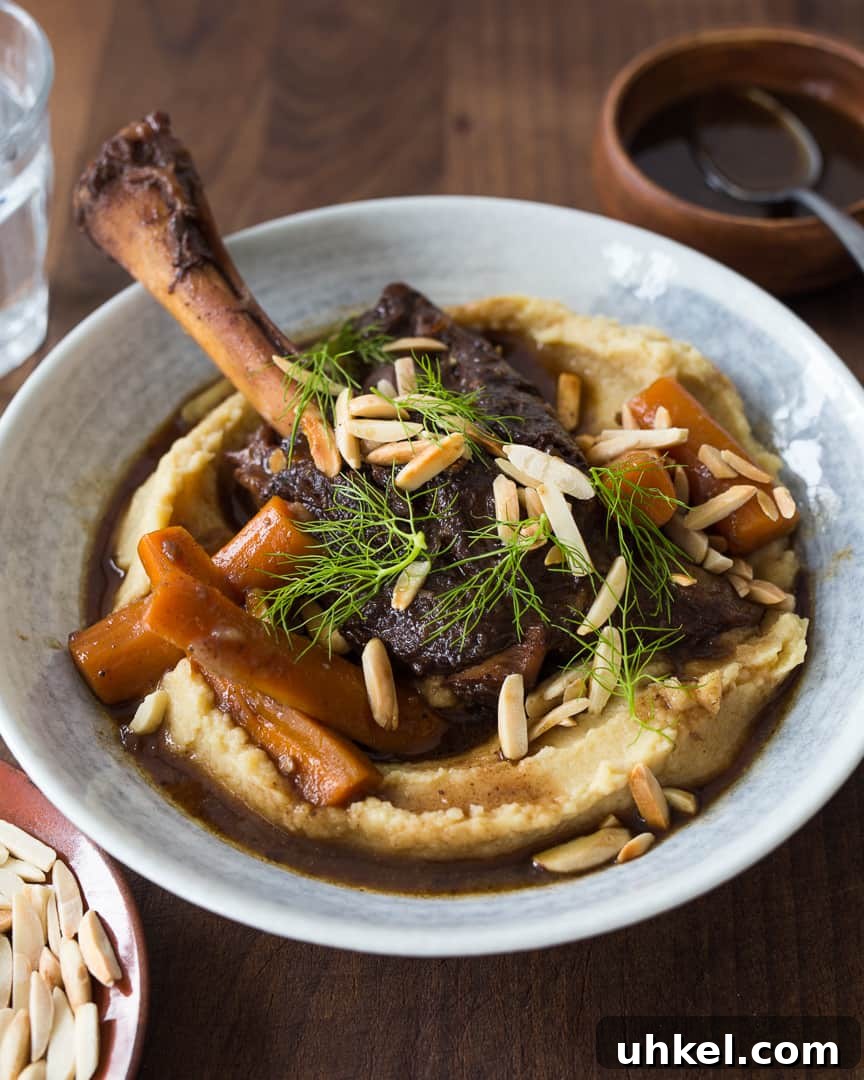
Below I include the pressure-cooker version and notes for making the recipe in a Dutch oven so you can choose the method that suits you. Both approaches yield succulent lamb with a fragrant, slightly sweet sauce that complements the spice blend.
Pin
Spiced Lamb Shanks – Whole30, Paleo
Ras el hanout gives these lamb shanks their distinctive North African character. Serve over creamy cauliflower purée and finish with toasted almonds.
Ingredients
- 3 lamb shanks
- 2 med yellow onions – cut into quarters
- 4 large carrots – cut into 2” pieces
- 2 stalks celery – cut into 2” pieces
- 1 bulb fennel – cut into wedges, tops discarded and fronds reserved for garnish
- 5-6 cloves garlic – smashed, peeled and left whole
- 1 cup 100% pomegranate juice
- 1.5 cups chicken or beef stock
- Kosher salt and freshly cracked black pepper
- Ras el Hanout spice mix
- Cayenne pepper, optional
- 1 tbsp avocado oil
- Toasted slivered almonds – for garnish
Instructions
-
Rinse lamb shanks and pat dry. Season all sides with ras el hanout, kosher salt, freshly cracked black pepper and a pinch of cayenne if using.
-
Set the pressure cooker to sauté. When hot, add 1 tbsp avocado oil and brown the shanks on all sides in batches so you don’t overcrowd the pot. Transfer browned shanks to a tray and set aside.
-
Pour in the pomegranate juice and use a wooden spoon to scrape up any browned bits from the bottom of the pot.
-
Nestle the lamb shanks in the pot and cover with onions, celery, carrots, fennel and garlic. Add the stock and bring the liquid to a simmer.
-
Set the cooker to manual, high pressure for 75 minutes. Close the lid and ensure the valve is in the sealing position.
-
When the timer ends, release the pressure manually. Using a slotted spoon, transfer the lamb shanks and vegetables to a tray. I typically keep the carrots and discard the other vegetables, but follow your preference.
-
Switch the cooker back to sauté and simmer the sauce until it reduces by about half (approximately 12–15 minutes), stirring occasionally. Tip: avoid thickening with starch; letting the sauce reduce naturally concentrates the flavors and yields a better texture.
-
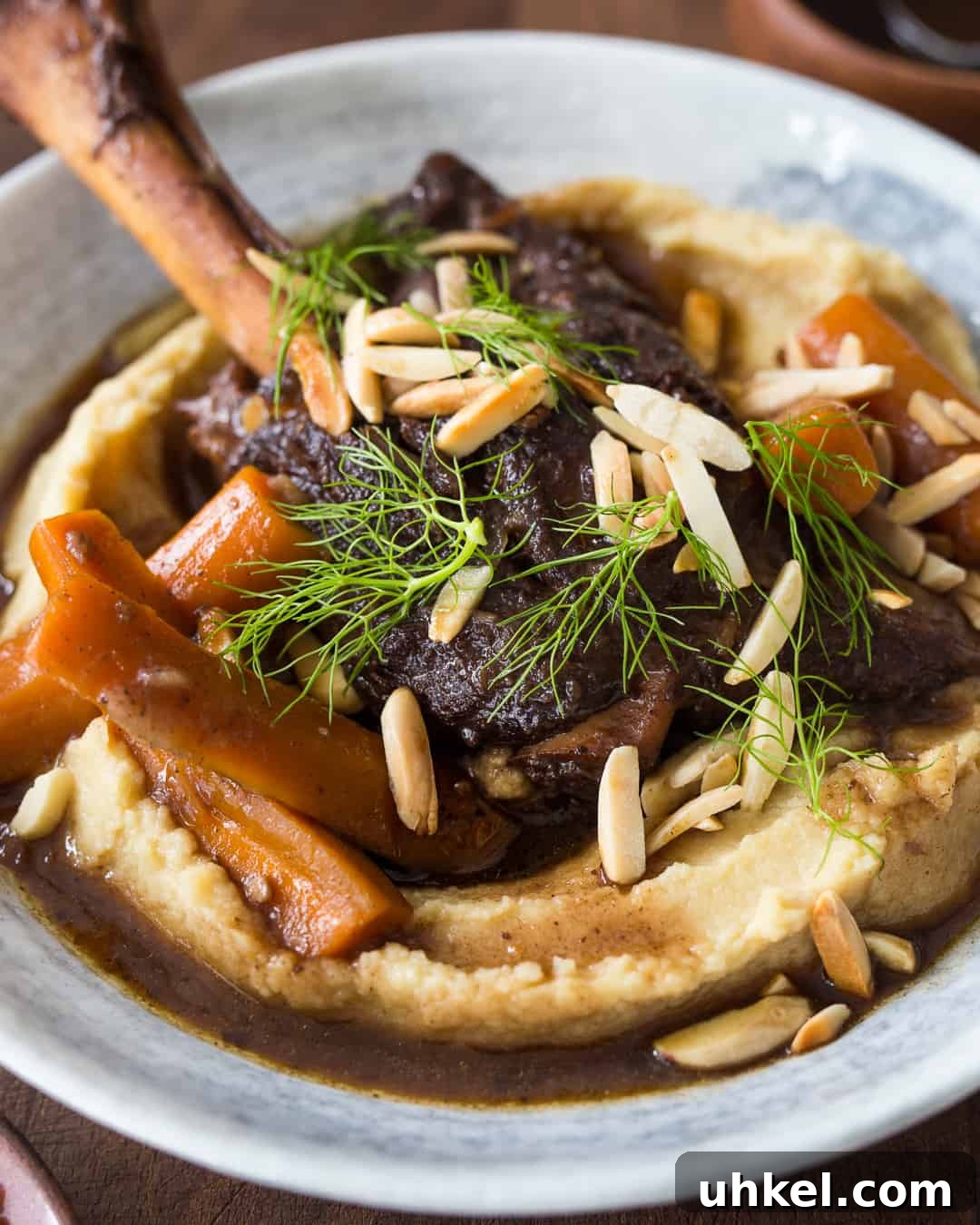
Serve each lamb shank with carrots over cauliflower purée. Spoon the reduced sauce over the meat and garnish with toasted slivered almonds and reserved fennel fronds.