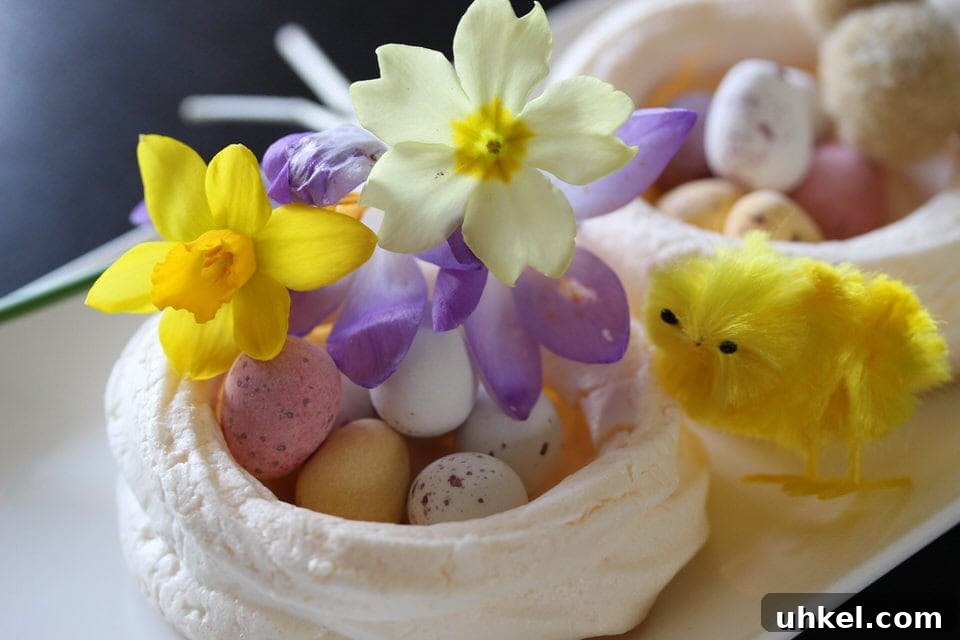
These meringue nests are a lovely way to use up leftover egg whites if you’ve made the Easter biscuits mentioned here. They work any time of year and can be filled however you like. You can even make mini pavlovas with them.
This post contains affiliate references. As an Amazon Associate the author may earn from qualifying purchases.
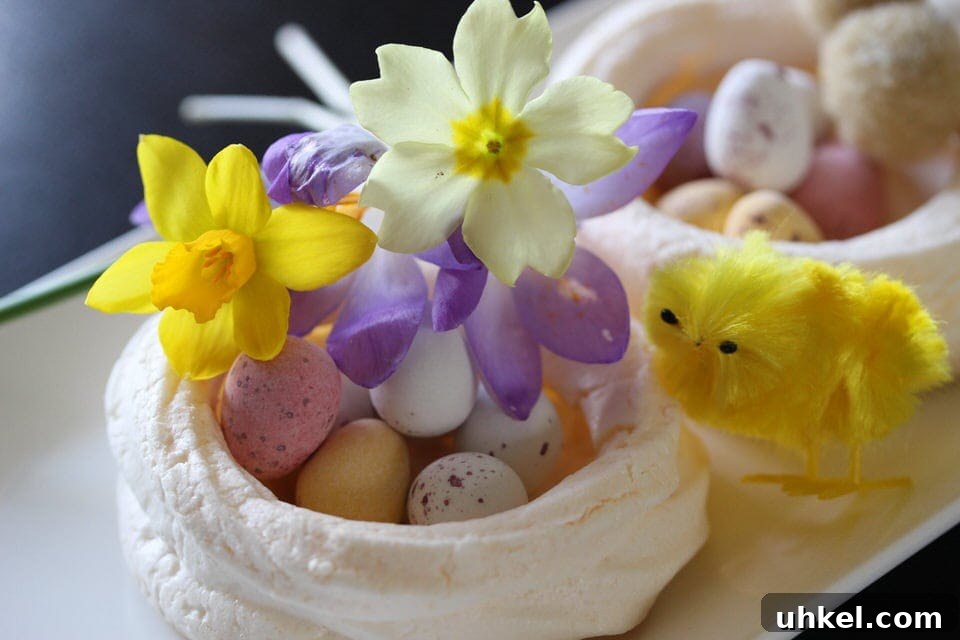
I often end up with extra egg whites after making recipes that call for yolks. Rather than waste them, I like to turn those leftovers into something delicious. These meringue nests are quick, simple and elegant — perfect for Easter, spring gatherings or anytime you want a pretty, airy dessert.
When I make gluten-free Easter biscuits I’ll often make these meringue nests at the same time so nothing goes to waste. If you need an egg-free alternative, there are plenty of vegan biscuit recipes that fit the bill and still make a lovely plate of treats.
How to make meringues
Meringues can look intimidating, but they are basically just egg whites and sugar. The technique is straightforward: gradually whip the whites until they are thick and glossy, then add the sugar slowly so it dissolves and the mixture remains stable.
Start whisking at low speed until the whites become frothy, then increase the speed until soft peaks form. Add the sugar one tablespoon at a time, making sure it is fully incorporated before adding the next. Bake at a low temperature and, crucially, leave the meringues to cool in the turned-off oven with the door closed — this helps prevent cracking and keeps them crisp on the outside and tender inside.
Equipment you’ll need
The easiest way to make meringues is with a stand mixer and a whisk attachment. A mixer speeds the process and gives a more stable result; machines that scrape the bowl sides are especially handy because you don’t need to stop and scrape down as often.
If you don’t have a stand mixer, an electric hand whisk works, though it’s more tiring. Making meringues by hand with a balloon whisk is possible but requires stamina. To shape nests you’ll also want a piping bag fitted with a star or round nozzle and a lined baking tray — reusable silicone liners or greaseproof paper work well to prevent sticking.
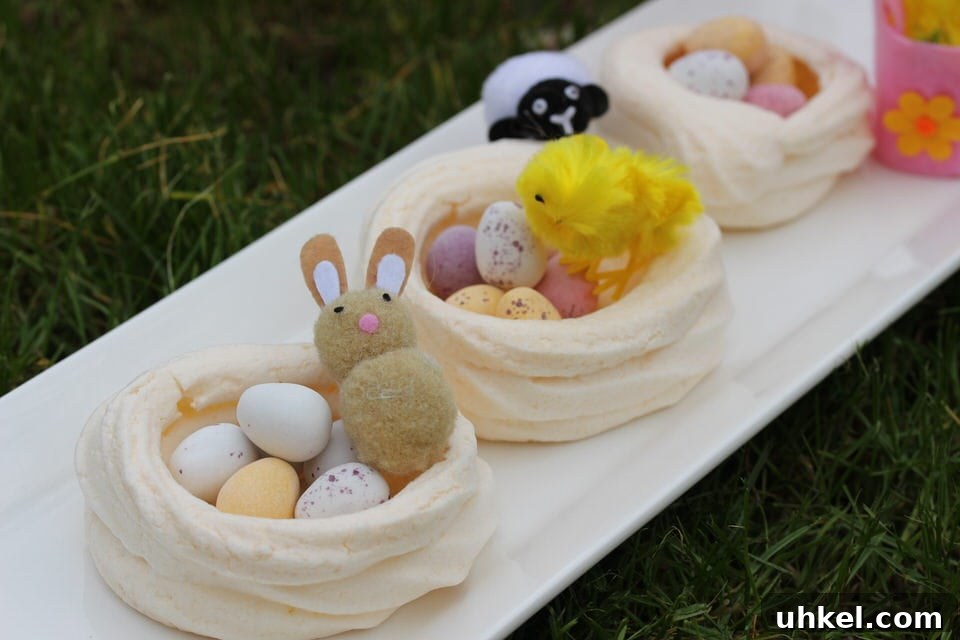
What to fill meringue nests with
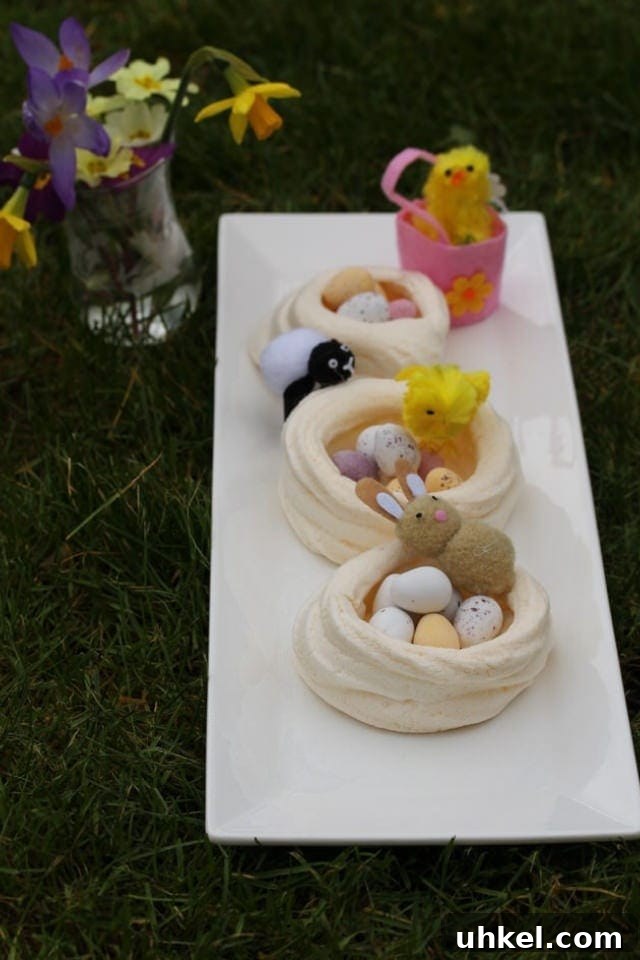
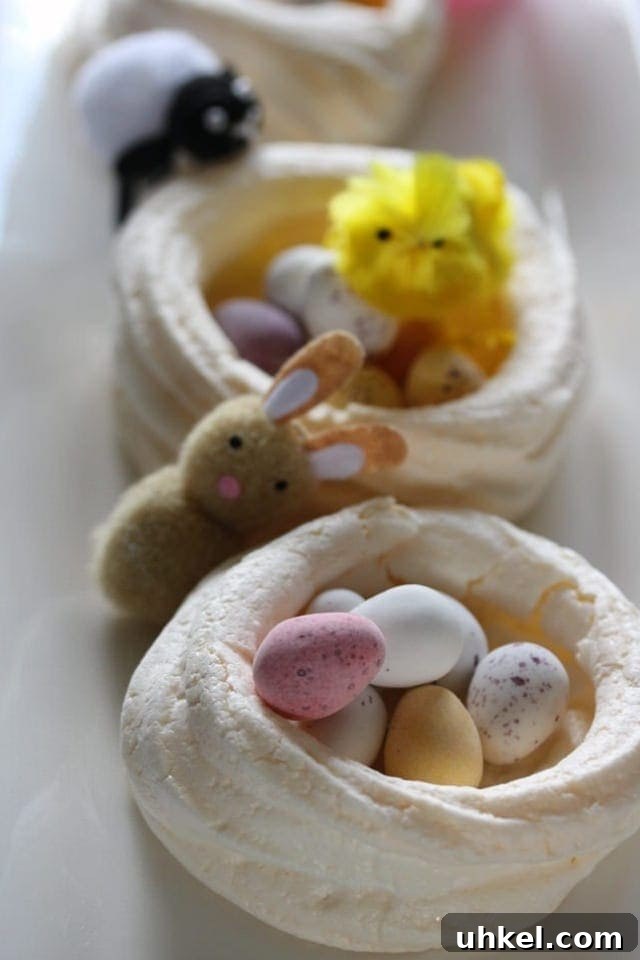
Meringue nests are incredibly versatile. For a classic Easter look, fill them with small chocolate eggs. For dairy-free options, use whipped coconut cream or make vegan chocolate truffles shaped like eggs.
Another favourite is to spoon in lightly whipped cream (or the thick part of canned coconut milk) and dollop a spoonful of lemon curd for brightness. You can also use mascarpone mixed with a little cream and honey, or turn each nest into a mini pavlova with whipped cream and fresh berries.
Use seasonal fruit and flavours to vary the presentation: berries and mint for summer, citrus curd for spring, or spiced chocolate cream for winter celebrations. The nests provide a crisp, sweet base that pairs well with tangy or creamy fillings.
Share what fillings you try — I love seeing creative combinations. If you plan to serve these at Easter, enjoy the celebration and happy baking.
Below is a straightforward, cleaned recipe card with ingredients and instructions so you can make your own meringue nests at home.
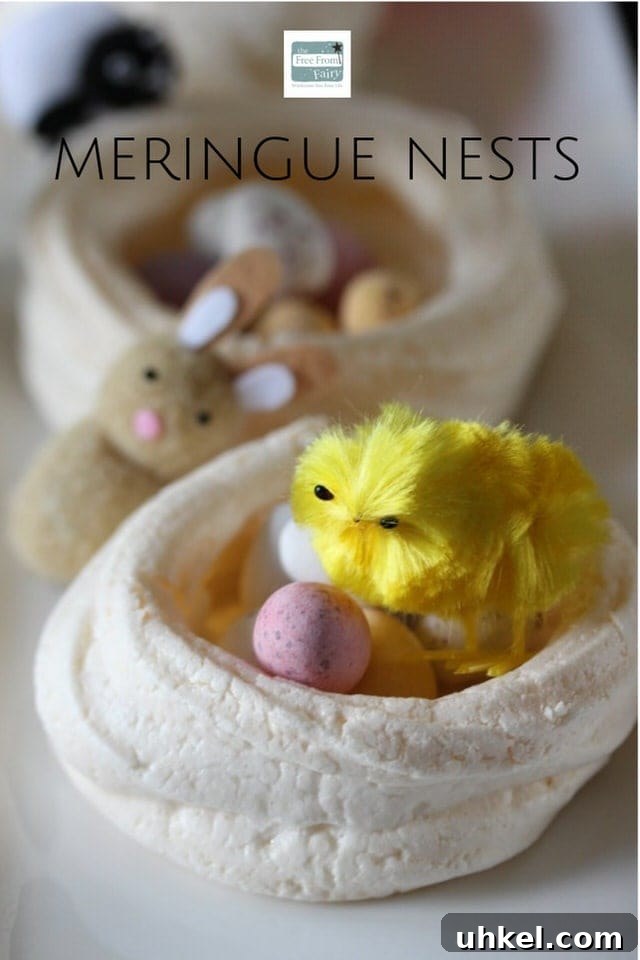
Meringue Nests
Light, crisp meringue nests that are perfect for filling with mini eggs, cream and berries, or any sweet filling you prefer.
Ingredients
- 3 medium egg whites (organic if preferred)
- 150 g white sugar
Instructions
- Preheat the oven to 120°C fan (around 140°C conventional, gas mark 1).
- Whisk the egg whites slowly on low speed for about two minutes until foamy.
- Increase the speed gradually to high and continue whisking until the whites form soft peaks when the whisk is lifted.
- With the mixer running, add the sugar one tablespoon at a time, ensuring each addition is fully incorporated before adding more. Continue until all the sugar is used and the meringue is glossy and holds firm peaks.
- Spoon the meringue into a piping bag fitted with a star or plain nozzle. Line a baking tray with greaseproof paper or a reusable silicone liner.
- To pipe a nest, start by piping a flat circular disk for the base (about 10cm diameter is a good size). Then pipe a raised rim around the edge by swirling the mixture around the outside of the disk to form a nest shape. Repeat with the remaining mixture.
- Bake in the preheated oven for 1 hour 15 minutes.
- After baking, turn the oven off and leave the meringues to cool completely inside the oven with the door closed. This helps prevent cracking and keeps them crisp.
Notes
Nutrition information is approximate and provided for guidance only. Meringues keep best in an airtight container in a cool, dry place for a few days. Fill just before serving for the crispiest texture.