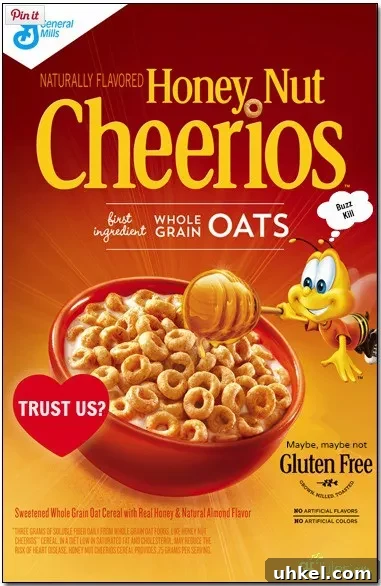
Is There Gluten In Cheerios?
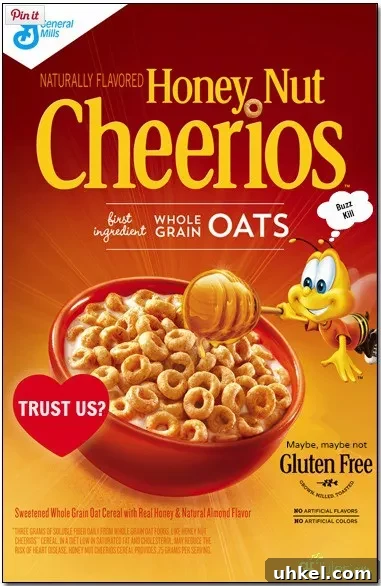 General Mills’ Cheerios have been the subject of concern within the gluten-free community after several lots of Yellow Box and Honey Nut Cheerios labeled “gluten free” were found to be contaminated. Consumer reports of illness led to testing and a recall. Below is a clear, chronological overview of the issue and the testing and production practices that have raised concern.
Gluten in Cheerios — 2015
In 2015 General Mills announced it would produce certain Cheerios varieties using oats that had been mechanically or optically separated to reduce contamination by gluten-containing grains, rather than using oats produced under a “purity protocol” (which keeps oats segregated from planting through packaging). The company said batches would be tested in-house, but their testing approach combined multiple boxes into composite samples and tested the lot mean. That method can mask localized contamination or “hot spots” inside individual boxes.
Gluten-free advocates and bloggers raised concerns about the testing protocol and the decision not to use purity-protocol oats. A Change.org petition and several detailed posts from gluten-free researchers questioned whether mechanical and optical sorting plus composite testing could reliably protect consumers with celiac disease or severe gluten sensitivity.
Reports of illness followed, prompting the FDA to test samples. Some tested samples showed gluten levels above accepted thresholds; one sample tested at 43 ppm and was from a recalled lot. In October 2015 General Mills disclosed that the Lodi, California plant had failed to test any lots of “gluten free” Cheerios for 13 days. During that same period, oats had been transported in containers previously used for wheat, introducing additional contamination. Customer complaints, followed by third-party attention, led to a recall of approximately 1.8 million boxes produced during that 13-day window.
Gluten in Cheerios — 2016
When General Mills expanded “gluten free” Cheerios into Canada using mechanically or optically sorted oats, the Canadian Celiac Association (CCA) publicly advised that people with celiac disease should avoid those products. The CCA summarized several points: oats are high-risk for gluten contamination; mechanical and optical sorting may not reliably remove wheat and barley because the grains are similar in size and color; broken kernels complicate sorting; and contamination within a batch is often uneven, creating hot spots that composite testing can miss.
The CCA and its scientific advisors stated they were not convinced by the testing procedures General Mills described, since those procedures might not detect localized contamination. Their recommendation was precautionary: until further evidence or more rigorous protocols were available, people with celiac disease or gluten sensitivity should not rely on Cheerios labeled “gluten free.”
Gluten in Cheerios — 2017
Reports of adverse reactions continued to reach the FDA. Investigative reporting highlighted ongoing complaints from people with celiac disease who said they became ill after eating Cheerios. Medical professionals advising celiac patients recommended avoiding products made with mechanically or optically separated oats because it remained unclear whether any single product could be guaranteed safe given the potential for uneven contamination and the limitations of current testing approaches.
Regulatory action in Canada followed: the Canadian Food Inspection Agency announced that the “gluten-free” claim would be removed from Cheerios packaging sold in Canada by January 1, 2018. General Mills clarified it would not relabel boxes already in stores as non–gluten-free but would not apply the “gluten-free” label to replenished stock.
Gluten in Cheerios — 2021 and the Testing Question
As of 2021, General Mills’ testing approach for Cheerios labeled “gluten free” still relied on composite samples: sub-samples taken from 12 to 18 boxes are combined and the lot mean is tested to determine whether the 24-hour production cycle qualifies as gluten-free. Composite testing does not identify which specific box—or boxes—contain elevated gluten, nor does it reliably detect uneven distribution of contamination within a lot. That continuing practice is why advocacy groups and some scientists have remained critical of the safety assurance for people with celiac disease.
Expert and Advocacy Perspectives
Organizations like the Gluten Free Watchdog and the Canadian Celiac Association have called for more rigorous sourcing and testing protocols, including the use of purity-protocol oats or individually tested boxes, to reduce the risk of undetected contamination. Their position is that mechanical or optical sorting combined with composite testing leaves room for dangerous “hot spots” of gluten and therefore cannot guarantee safety for highly sensitive consumers.
If you or someone you know experienced illness after consuming a product labeled gluten-free, including Cheerios, consider reporting the adverse event to your national food safety authority so it can be investigated.
For those seeking a certified gluten-free oat cereal, consider products that carry a recognized third-party gluten-free certification and that use purity-protocol oats. Certification programs typically require supply-chain controls and testing protocols designed to detect and prevent localized contamination.