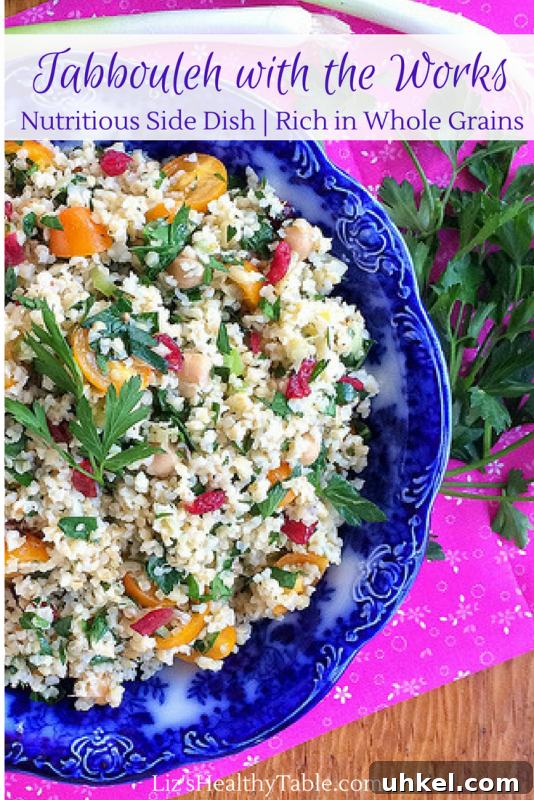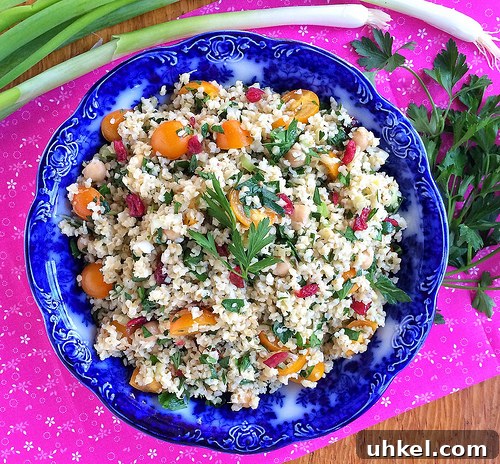
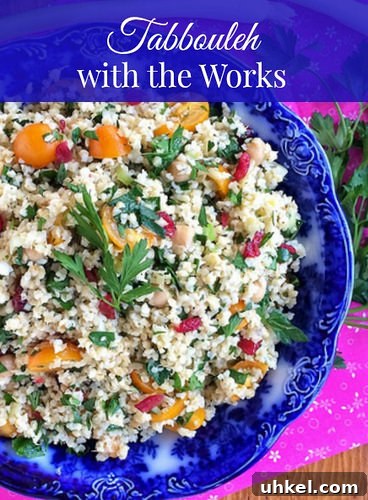
This simple tabbouleh side dish features bulgur wheat, parsley, chickpeas, dried cranberries, and juicy tomatoes. It’s full of bright flavors and satisfying fiber.
When you think of whole grains, you might picture whole wheat bread, brown rice, or oats. But the category is much broader and includes many versatile options you can use in salads, sides, and main dishes.
Whole grains you might try include amaranth, barley, buckwheat, corn, millet, oats, quinoa, rice, rye, sorghum, teff, triticale, and wild rice. Within the wheat family you’ll find spelt, emmer, farro, einkorn, kamut, and bulgur—the ingredient used in this recipe.
Bulgur and other whole grains to explore
Wheat varieties at markets often include spelt, emmer, farro, einkorn, and kamut; bulgur is the focus here.
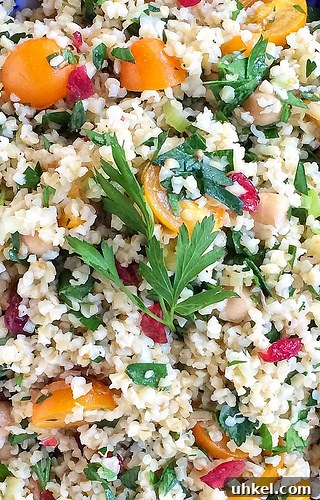
Traditional tabbouleh uses fine bulgur, but you can substitute other grains such as barley, rice, or quinoa if you prefer.

Recently, experts at a whole grains conference discussed topics like the rise in celiac disease, the demand for gluten-free options, and trends such as sprouted grains. The talks underscored how many typical diets are heavy on processed foods and light on fruits, vegetables, and whole grains.

A presentation slide illustrated a common weekly shopping pattern: many packaged, processed items and not enough fresh produce or whole grains. Incorporating simple recipes like tabbouleh can help rebalance meals.
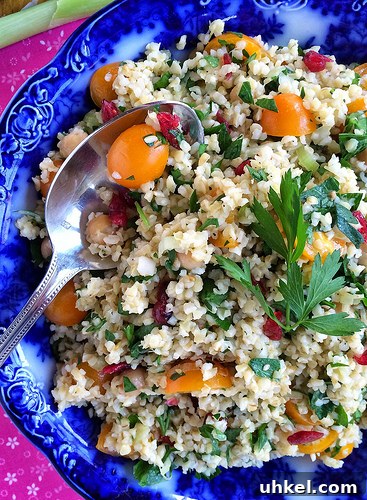
About bulgur
What is bulgur? Made from parboiled, dried, and cracked wheat kernels, bulgur is quick to prepare and comes in different sizes—instant/fine, medium, and coarse. Tabbouleh typically calls for fine bulgur.
Nutrition snapshot: One cup of cooked bulgur provides around 150 calories, a good amount of fiber, carbohydrates, and plant protein, plus a modest source of iron.
Culinary uses: Bulgur works well in salads like tabbouleh, in pilafs, and as a base for side dishes. It offers a slightly chewy texture and a mild, nutty flavor.
Tweet: “Tabbouleh with the Works recipe made with bulgur wheat, parsley, tomatoes, lemon juice, and olive oil. Vegetarian whole-grain side dish perfect for dinner or a lunchbox.”
- 1 cup fine bulgur wheat
- 1 teaspoon kosher salt
- Zest of 1 lemon
- Juice of 1 lemon (3 to 4 tablespoons)
- 3 tablespoons extra virgin olive oil
- 2 cups parsley leaves, roughly chopped
- 1 cup orange, yellow, or red grape tomatoes, halved (or quartered for children)
- 1 cup canned chickpeas, drained and rinsed
- 2 scallions, white and light green parts, finely chopped (about 1/4 cup)
- 1/4 to 1/2 cup dried cranberries
- Place the bulgur and salt in a large, heat-safe bowl. Pour 1½ cups boiling water over the bulgur and stir. Cover and let sit 30 to 60 minutes, until the liquid is absorbed.
- Stir in lemon zest, lemon juice, and olive oil until combined. Add the parsley, tomatoes, chickpeas, scallions, and cranberries and mix gently.
- Serve immediately or cover and chill for 2 to 3 hours to allow flavors to meld. Adjust seasoning with kosher salt and pepper to taste.
Which whole grain is your favorite, and how do you like to prepare it?