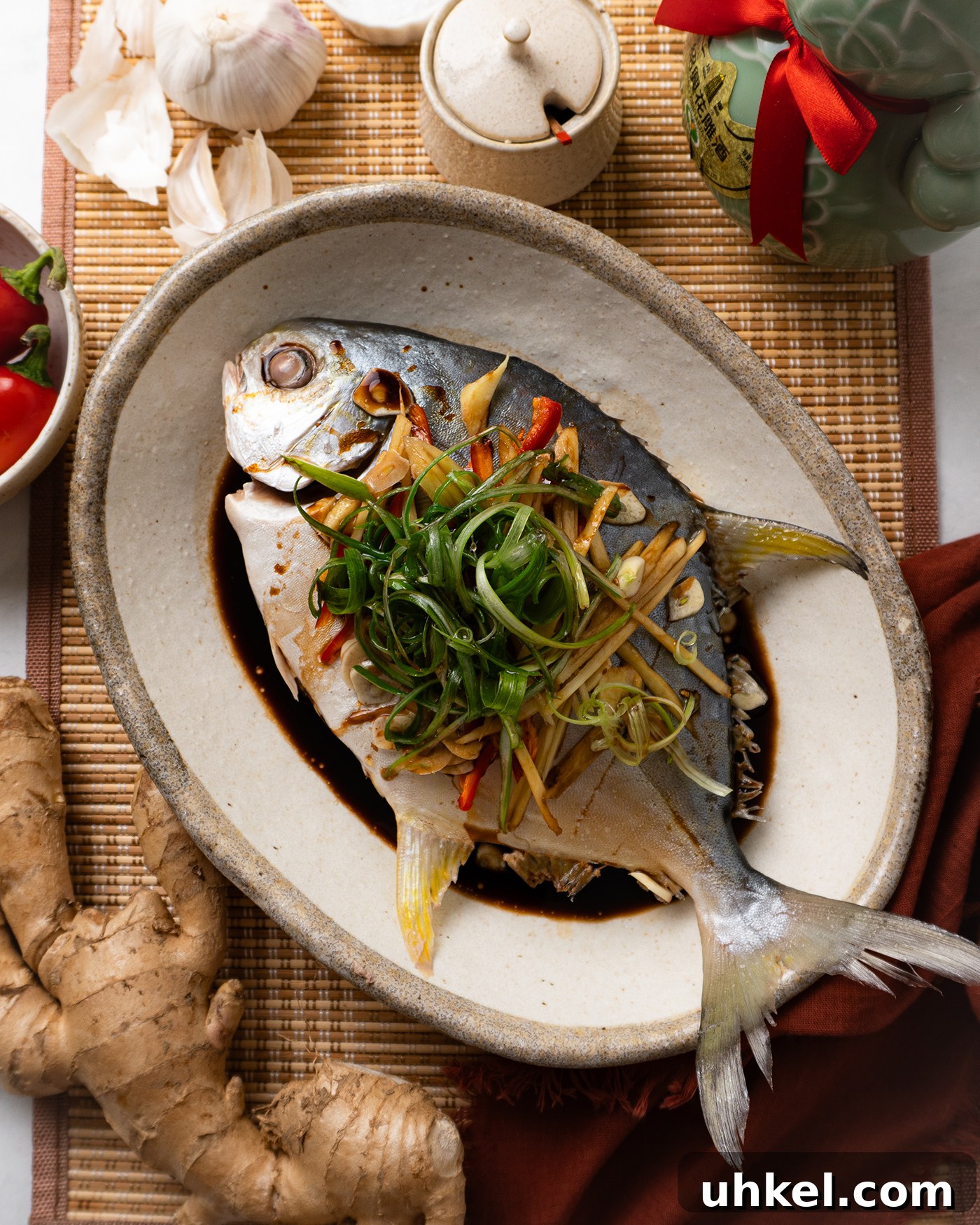
Steaming a whole fish is an easy way to create an impressive centerpiece that looks beautiful and comes together in under 15 minutes.
Steamed Pompano is perfect for Lunar New Year or any celebration: the fish cooks until tender and flaky, then is finished with a fragrant ginger-scallion sauce and sizzling hot oil. Though it looks restaurant-worthy, this dish is quick and simple to make at home.
Below you’ll find straightforward steps, useful tips, and the full recipe so you can serve a stunning steamed fish with confidence.
Table of Contents
- Steamed Pompano: A Dish Made for Gatherings
- Lunar New Year Traditions in the Philippines
- A Filipino American Story of Lunar New Year
- More Than Just Good Luck: Benefits of Eating Steamed Pompano
- What To Serve with Steamed Pompano
- Equipment
- Ingredients
- Steamed Pompano
- Ginger Scallion Sauce
- Recipe
- Steam the Pompano
- Combine Sauce and Serve
- Final Thoughts
Steamed Pompano: A Dish Made for Gatherings
Serving a steamed whole fish makes a memorable statement at any celebration. While it’s traditional for Lunar New Year, it also works beautifully for birthdays, dinner parties, or an elevated weeknight meal.
Pompano is a mild white fish often used in Filipino kitchens. It has a delicate flavor, flaky texture, and relatively few bones, making it a family-friendly option that’s both accessible and affordable.
The finishing sauce—made with xiaoxing wine, tamari (or soy), ginger, garlic, chilies, and scallions—pairs perfectly with the steamed fish. Pouring hot oil over the aromatics right before serving releases a dramatic sizzle and an irresistible fragrance that elevates the dish.
Lunar New Year Traditions in the Philippines
The Philippines has a long history of Chinese influence, and many Filipino families celebrate Lunar New Year or incorporate Chinese customs into their gatherings. Filipino-Chinese communities and mixed-heritage families have woven these traditions into Filipino food culture.
White fish is commonly served steamed in Chinese celebrations—sea bass, carp, or catfish are typical choices. In Filipino homes, white fish such as pompano, lapu-lapu (grouper), or tilapia are frequently used for a similar presentation and sentiment of abundance.
A Filipino American Story of Lunar New Year
Many Filipino-American families blend traditions, and Lunar New Year customs often appear alongside other holiday celebrations. For some, classic Lunar New Year elements—lucky foods like whole fish, pancit, lumpia, and sweet tikoy, as well as angpao (red envelopes)—became part of family gatherings during the holidays.
Growing up in communities with Filipino, Chinese, and other Asian cultures nearby makes it easy to share and celebrate across traditions. Attending local festivals or hosting friends for Lunar New Year is a warm way to connect with those shared customs.
More Than Just Good Luck: Benefits of Eating Steamed Pompano
Reasons to try Steamed Pompano:
- Symbolic abundance — Serving a whole fish represents prosperity and completeness for the coming year.
- Healthy cooking — Steaming preserves nutrients and requires minimal added fat, while pompano delivers lean protein and important vitamins.
- Easy to prepare — With a steamer and a small saucepan for the oil, this recipe yields impressive results with minimal effort.
What To Serve with Steamed Pompano
Steamed Pompano pairs well with plain rice and simple vegetables, or as part of a larger Lunar New Year spread. Consider serving it alongside other festive dishes such as:
- Tikoy (Nian Gao)
- Pancit
- Lumpia
- Dumplings
Equipment
- Bamboo steamer or stovetop steamer
- Large pot or wok to hold the steamer
- Small saucepan for heating oil
- Mixing bowl for the sauce
- Sharp knife and cutting board
Ingredients
Steamed Pompano
- 1 whole pompano (400–600 g), cleaned and gutted
- Kosher salt, for seasoning
Note 1. Frozen pompano often arrives cleaned and gutted; once thawed it’s ready to cook. If buying fresh, your fishmonger can usually clean it for you.
Ginger Scallion Sauce
- 2 tbsp xiaoxing wine
- 2 tbsp tamari or low-sodium soy sauce
- 4 cloves garlic, thinly sliced
- About 20 g ginger, cut into matchsticks
- Red chili peppers, sliced into matchsticks (adjust to taste)
- 2 stalks green onions, sliced lengthwise or into thin ribbons
- 3–4 tbsp neutral oil (canola or other) plus a little extra for seasoning
Note 2. For a delicate presentation, slice green onions into thin ribbons and soak briefly in ice water so they curl; this is optional.
Recipe
Steam the Pompano
- Score 2–3 shallow slits on each side of the fish, from the dorsal fin toward the belly. This helps the heat penetrate evenly.
- Lightly brush the fish with a thin layer of oil and season with kosher salt.
- Place the fish in a preheated steamer over simmering water. Steam for about 10 minutes, or until the flesh becomes opaque and flakes easily with a fork.
Combine Sauce and Serve
- In a small bowl, mix the xiaoxing wine and tamari (or soy sauce).
- When the fish is cooked, transfer it to a serving platter. Pour the sauce over the fish, then top with the sliced garlic, ginger matchsticks, chilies, and green onions.
- In a small saucepan, heat 3–4 tablespoons of oil over medium heat until hot but not smoking (about 1–2 minutes). Carefully pour the hot oil over the aromatics and fish to release their aroma and create a sizzling finish. Serve immediately with steamed rice.
Final Thoughts
This Steamed Pompano recipe gives you an impressive, flavorful centerpiece in under 15 minutes. The simple steaming method keeps the fish tender and clean-tasting, while the hot-oil finish brings a restaurant-style aroma and texture that delights guests.
Enjoy the dish as part of a festive Lunar New Year spread or any special meal. If you try it, share your experience and make it your own by adjusting aromatics and spice to taste.
Filipino-Chinese Steamed Pompano with Fragrant Ginger Scallion Sauce
Ingredients
- 1 pompano, 400–600 g, cleaned and gutted
- Kosher salt, for seasoning
- 2 tbsp xiaoxing wine
- 2 tbsp tamari or low-sodium soy sauce
- 4 cloves garlic, sliced
- About 20 g ginger, sliced into matchsticks
- Red chili peppers, sliced to taste
- 2 stalks green onions, sliced
- 3–4 tbsp canola oil, plus extra for seasoning
Instructions
Steam the Pompano
- Score 2–3 slits on each side of the fish, from the dorsal fin toward the belly.
- Brush with a thin layer of oil and season lightly with salt.
- Steam for about 10 minutes, until the flesh is opaque and flakes easily.
Combine Sauce and Serve
- Mix the xiaoxing wine and tamari in a small bowl.
- Place the cooked fish on a serving platter. Pour the sauce over the fish and top with garlic, ginger, chilies, and green onions.
- Heat 3–4 tbsp oil in a saucepan until hot, then carefully pour the oil over the aromatics and fish to release the sizzle. Serve at once.
Notes
Note 1. Frozen pompano is often sold cleaned and gutted—just thaw and cook. Ask your fishmonger to clean fresh fish if needed.
Note 2. For a decorative touch, slice green onions into thin ribbons and briefly chill them in ice water so they curl; this is optional.
More Recipes You’ll Love
References & Further Reading
Besa, Amy, and Romy Dorotan. Memories of Philippine Kitchens. New York City, Stewart, Tabori & Chang, 2006. Pg 73–75.
Chou, Hsiao-Ching and Meilee Chou Riddle. Feasts of Good Fortune: 75 Recipes for a Year of Chinese American Celebrations. Seattle, Sasquatch Books, 2024. Pg 75.