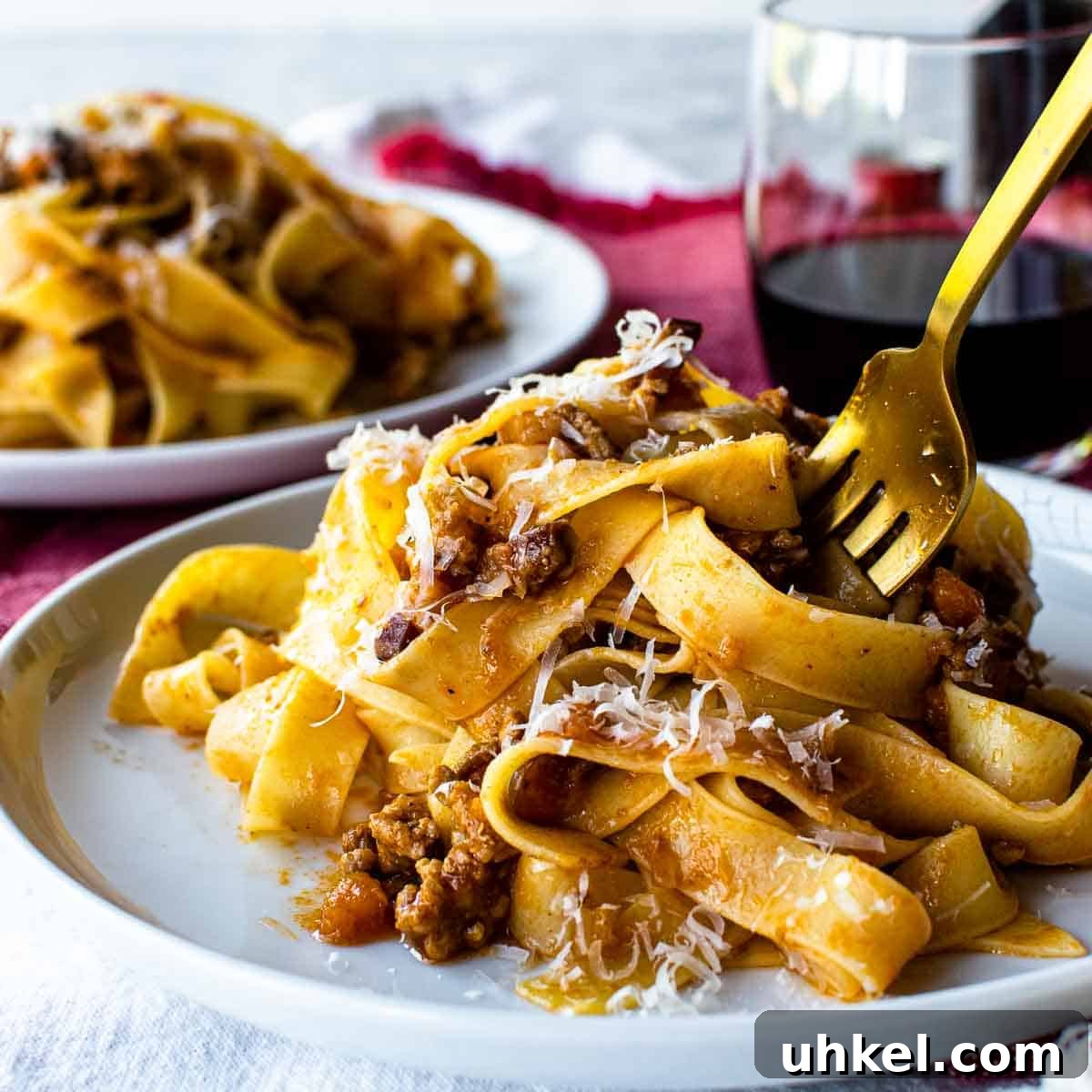
Tagliatelle alla Bolognese is a classic, comforting pasta dish loved by many. A slow-cooked Bolognese made with beef, pork and pancetta combined with perfectly cooked tagliatelle creates a rich and deeply satisfying meal.
A true Bolognese is built from a flavorful base and simmered slowly until the meat is tender and the sauce develops depth. In Italy this sauce is traditionally served with tagliatelle—long, flat ribbons of pasta about 6 mm wide—because their broad surface holds the ragù far better than thin spaghetti.
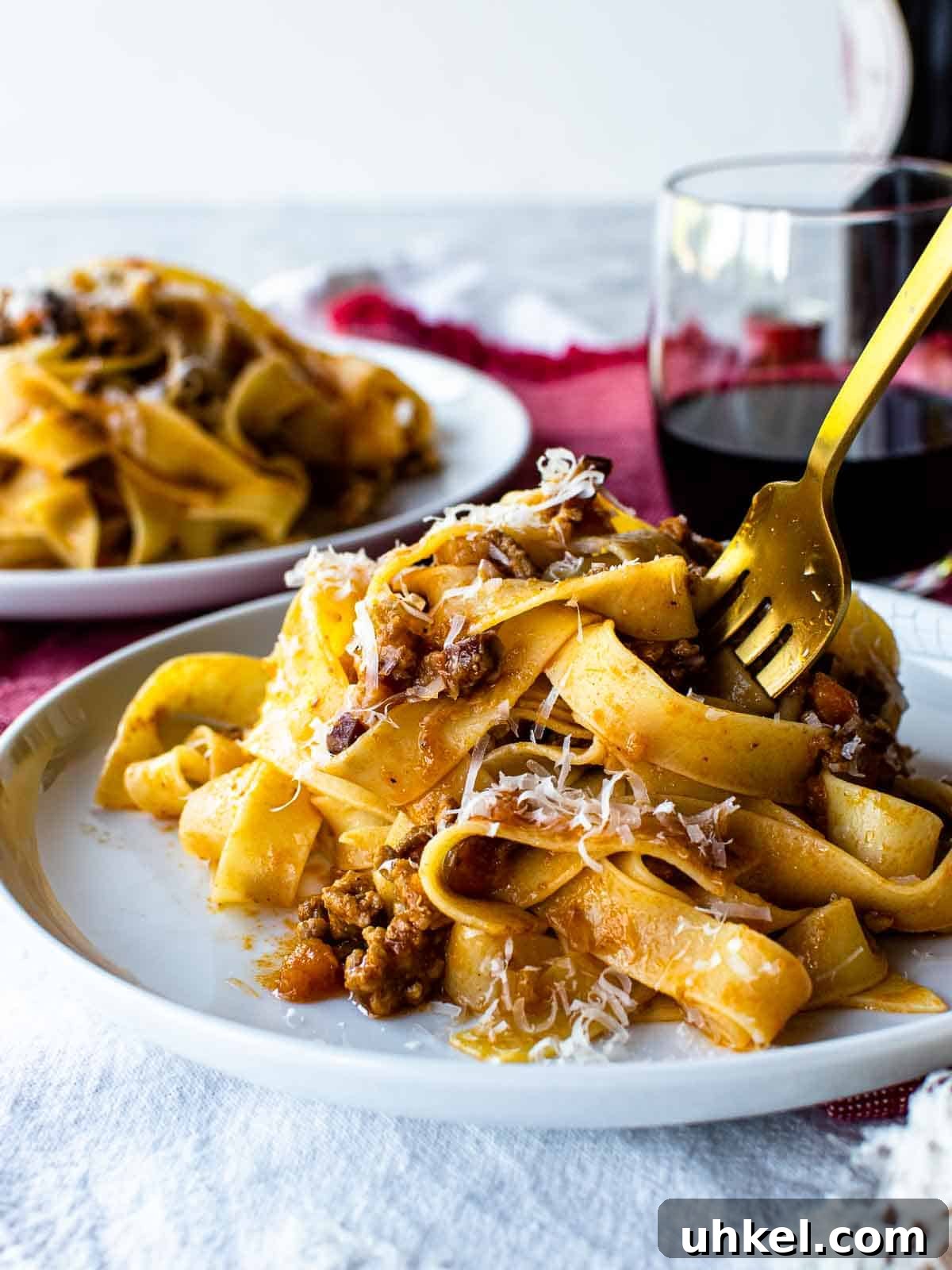
Why you’ll love this recipe
- Delicious: Tagliatelle alla Bolognese offers deep, layered flavors from slowly cooked meat and aromatic vegetables.
- Comforting: The thick, meaty sauce clings to wide ribbons of pasta, creating a generous, satisfying dish.
- Worth the time: This recipe requires patience and a low simmer, but the result is well worth the effort.
Scroll to the recipe card below for ingredient amounts and step-by-step instructions.
Ingredients
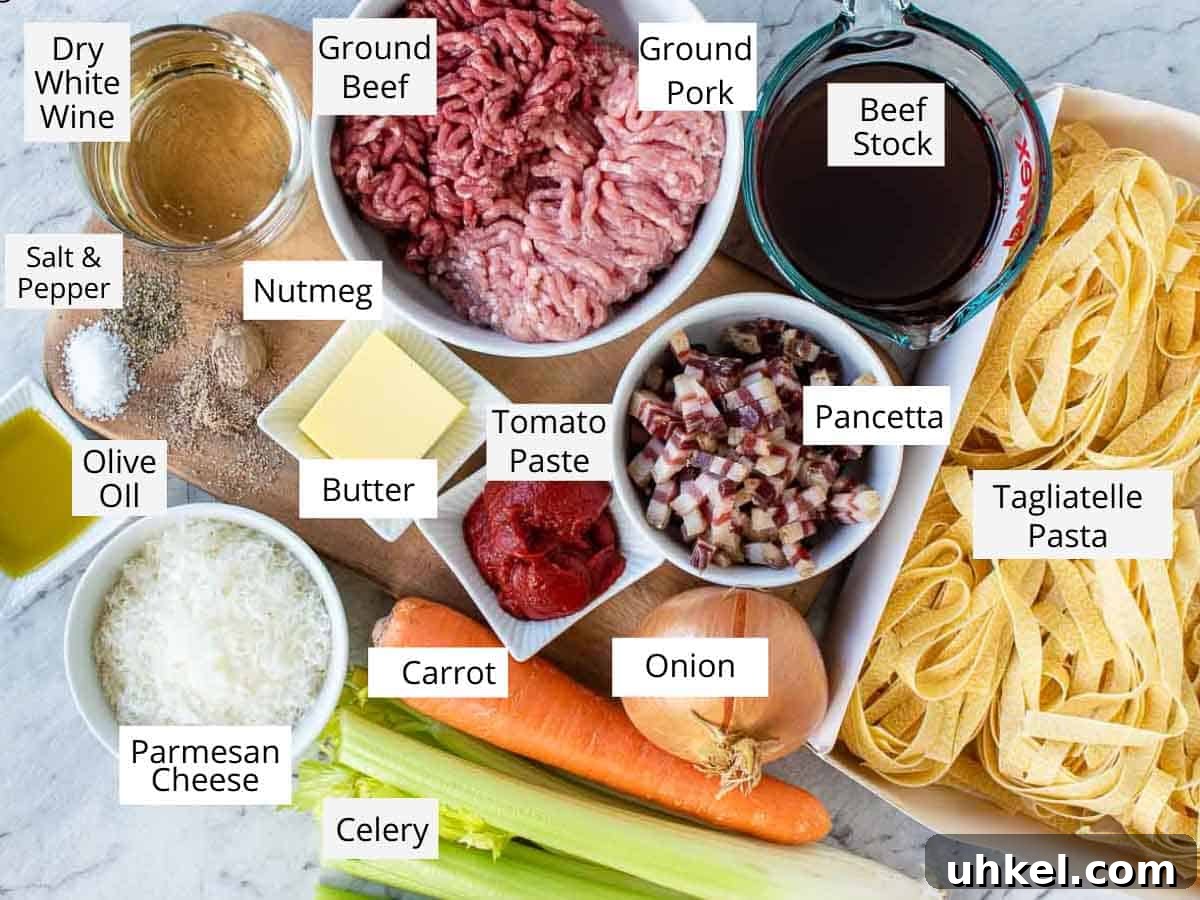
The quality and balance of ingredients are important in this recipe. Even small amounts of each item contribute to the final character of the sauce.
- Pasta: Fresh tagliatelle or high-quality dried tagliatelle.
- Extra virgin olive oil: For flavor; regular olive oil is a reasonable substitute.
- Soffritto: Finely chopped onion, carrot and celery—the aromatic base of the sauce.
- Pancetta or bacon: Adds a savory depth; pancetta is traditional.
- Ground meats: A mix of ground beef (with some fat) and ground pork (about 15% fat) gives the best texture.
- Dry white wine: Adds brightness; the alcohol cooks off during simmering.
- Beef stock: Use homemade or good-quality store-bought stock.
- Tomato paste: Concentrated tomato flavor—use paste rather than puree.
- Fresh nutmeg: A small amount grated for subtle warmth.
- Salt and black pepper: To season.
- Parmigiano Reggiano: Freshly grated to finish and serve.
Variations
- You can substitute part of the ground meat with small pieces of beef chuck or pork belly. These break down during long cooking and add texture to the sauce, resembling a traditional ragù alla bolognese.
- Some cooks add a little milk (for example ½ cup) in place of some stock to soften the acidity and tenderize the meat. This is optional and reflects regional preferences.
Instructions
Prepare the vegetables and pancetta by peeling and finely dicing them. Heat a shallow casserole or a large lidded skillet over medium-low heat before adding the fat.
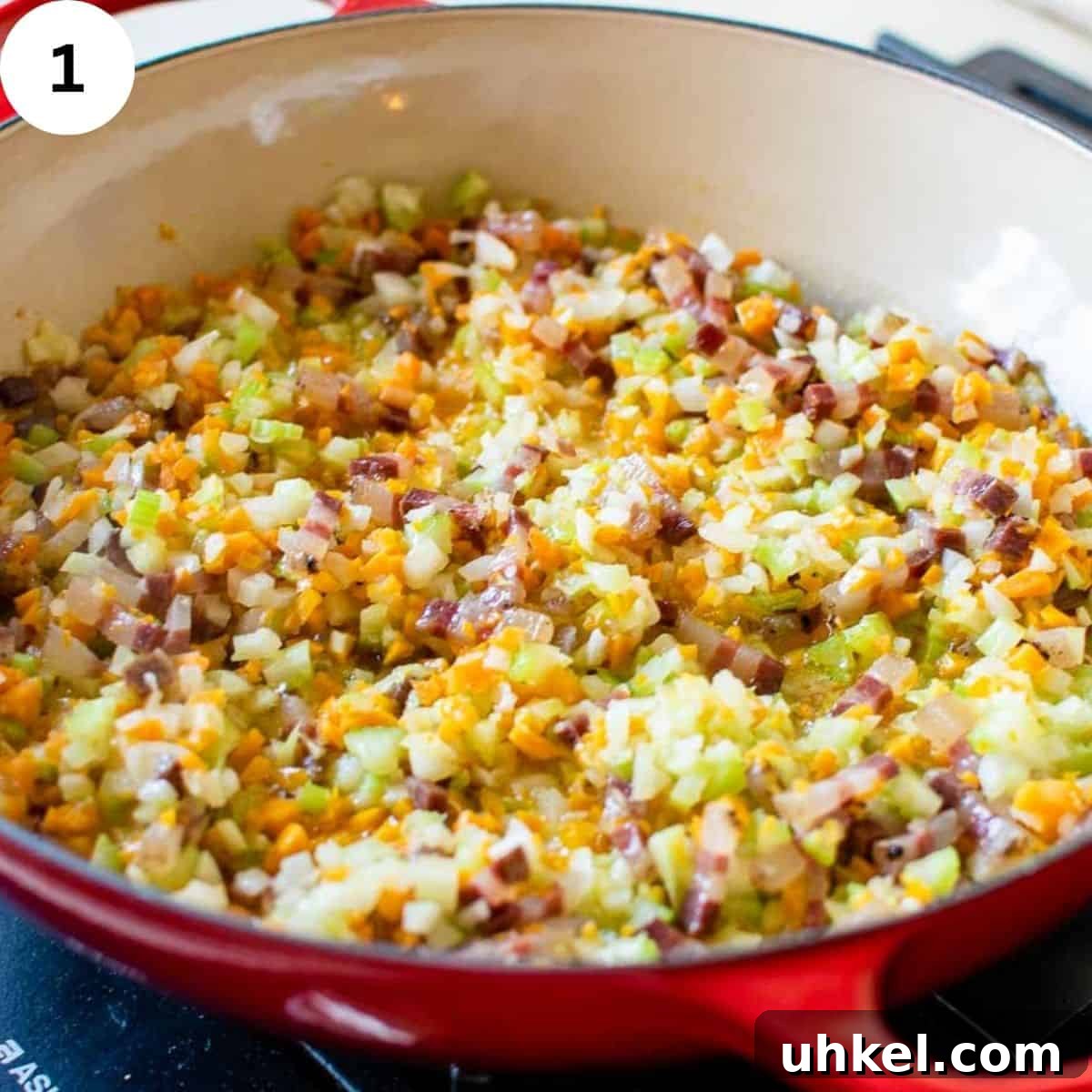
Warm the olive oil and butter, then add the onion, carrot, celery and pancetta. Cook gently until the vegetables are soft and lightly golden.
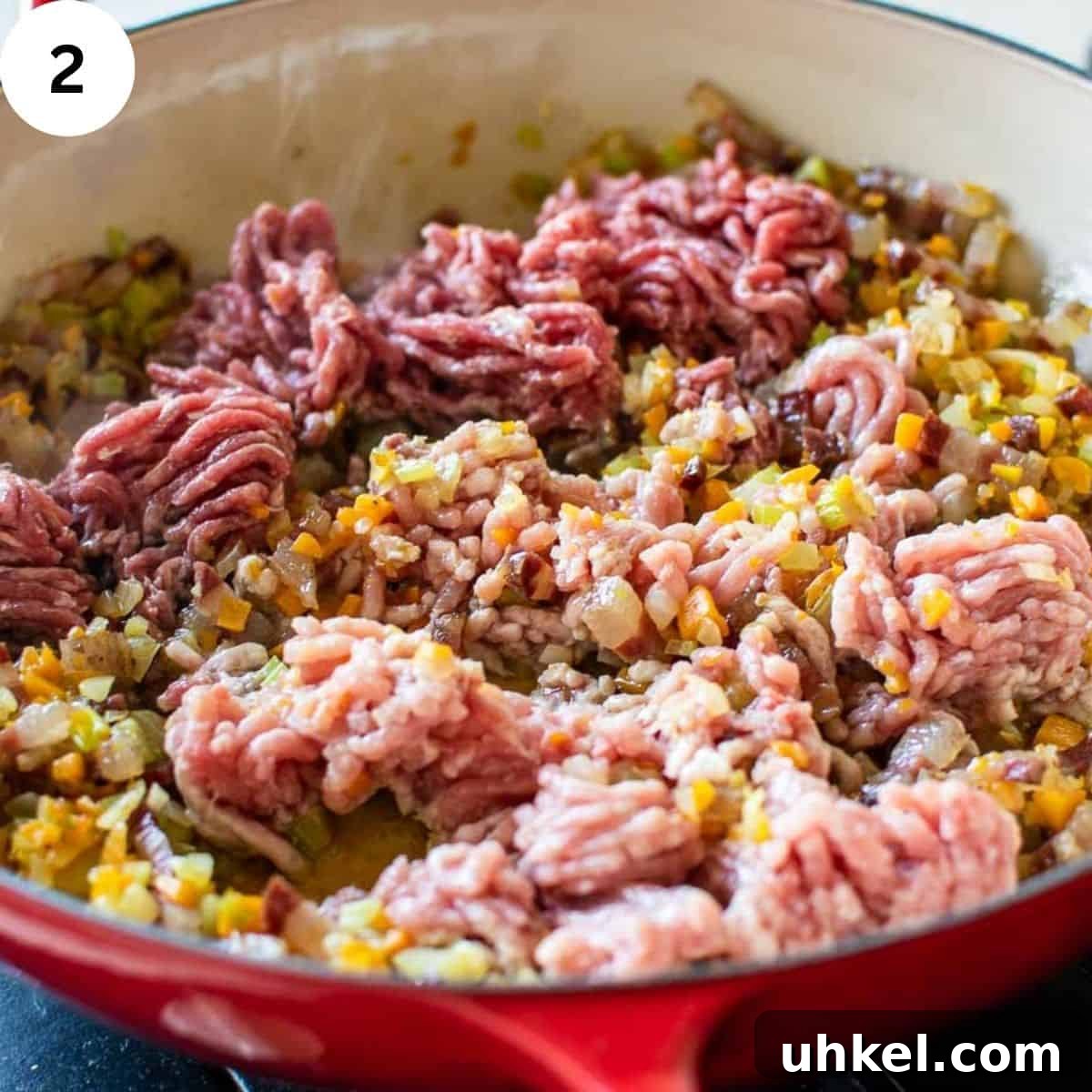
Using your hands, break up the ground beef and pork and add to the pan. Brown thoroughly, breaking up any lumps with a wooden spoon, and continue until the meat has released its juices and most moisture has evaporated.
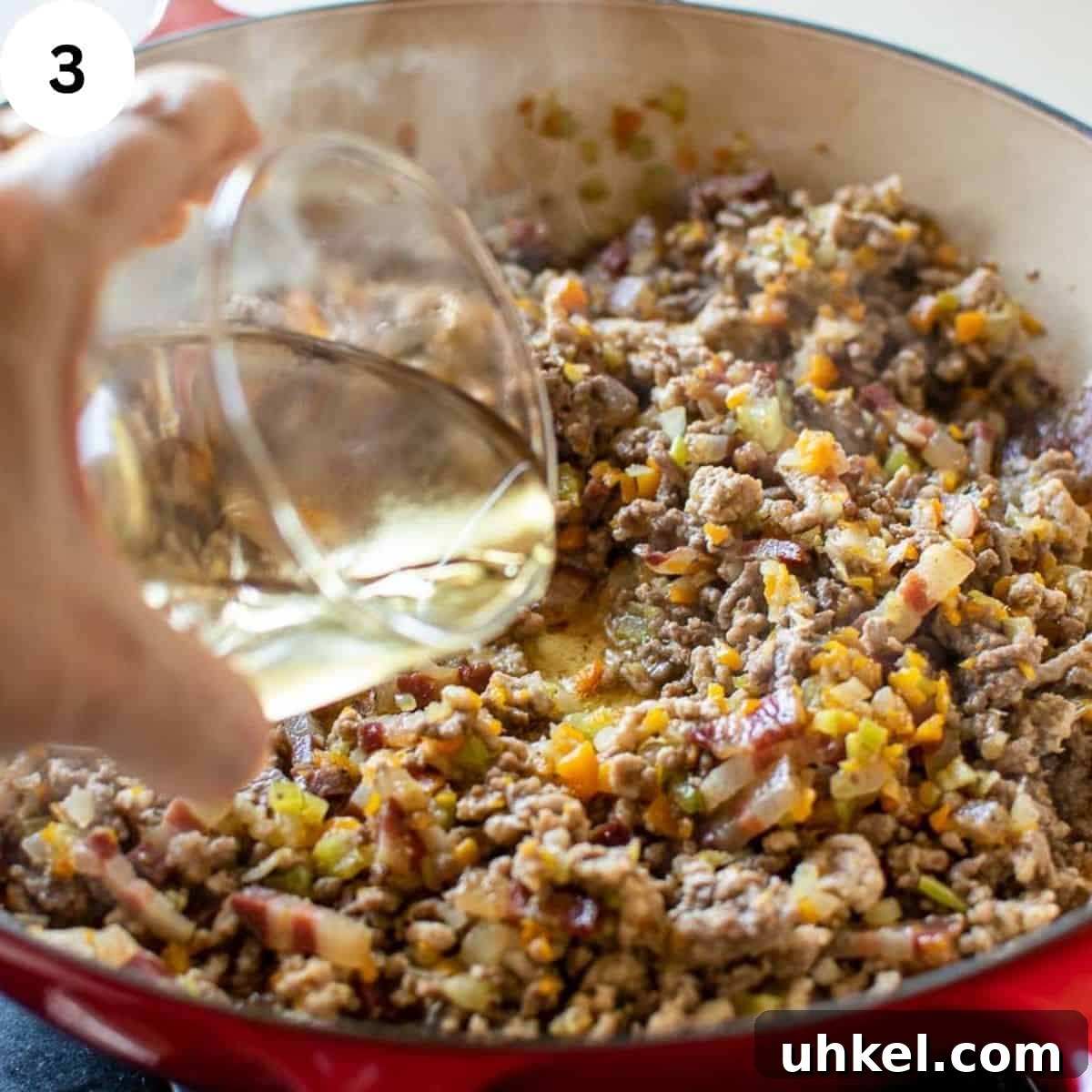
Pour in the white wine and let it evaporate completely, stirring to lift any browned bits from the pan.
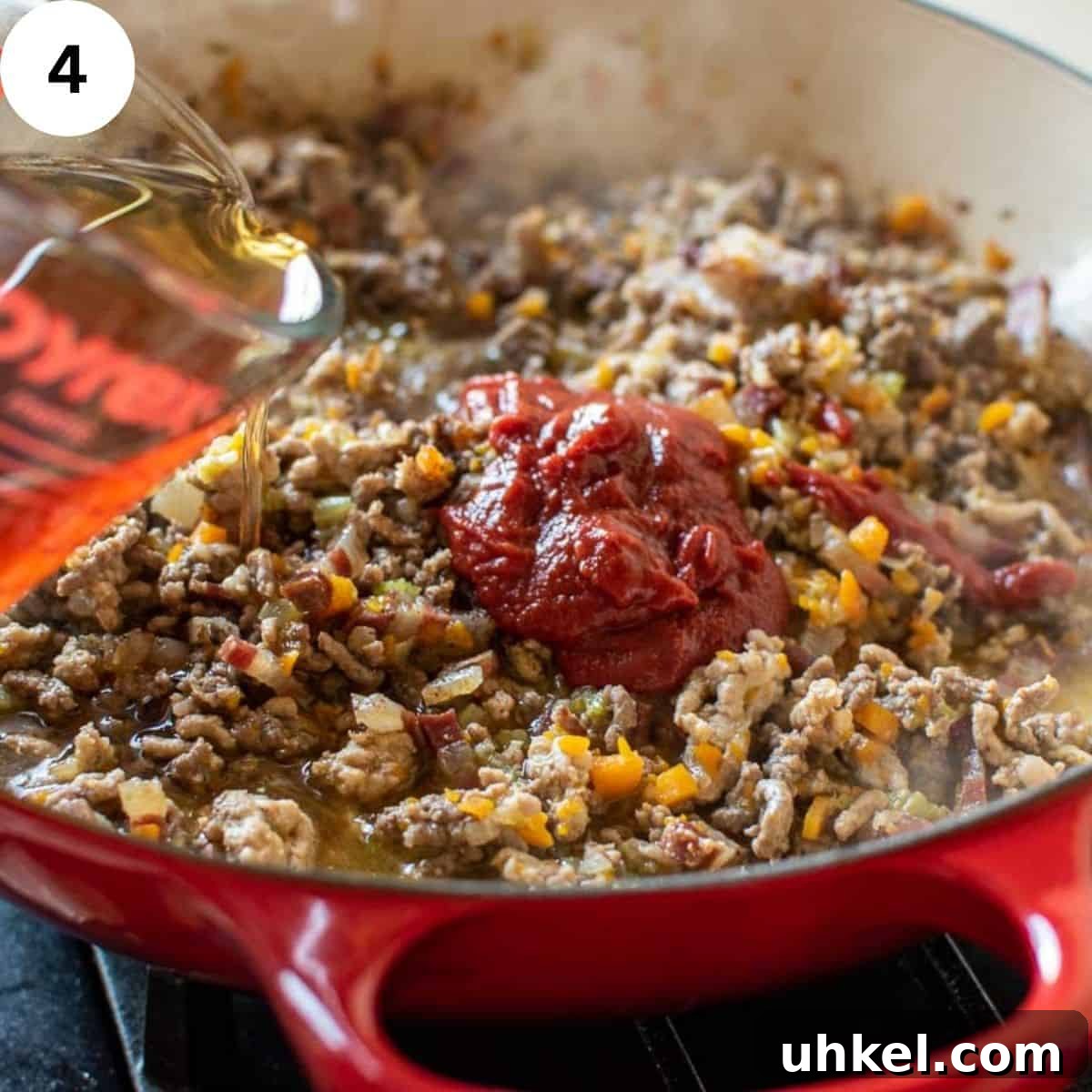
Stir in beef stock, tomato paste, freshly grated nutmeg, salt and pepper. Bring the mixture to a gentle simmer.
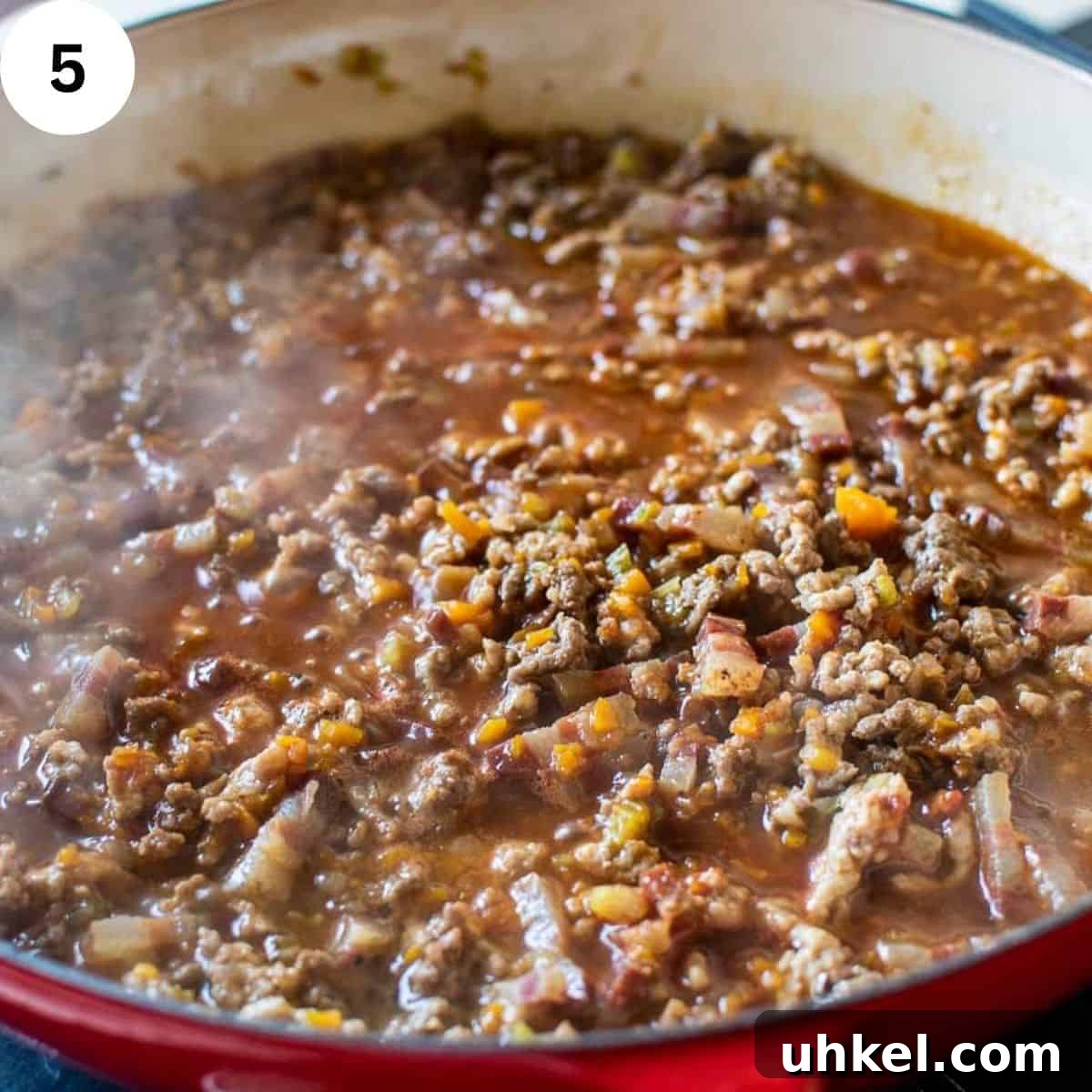
Lower the heat, cover with the lid and simmer slowly for about 2 hours. Check occasionally to ensure the sauce does not dry out or stick; add a splash of water or stock if needed. The sauce should reduce slowly and become thick and concentrated.
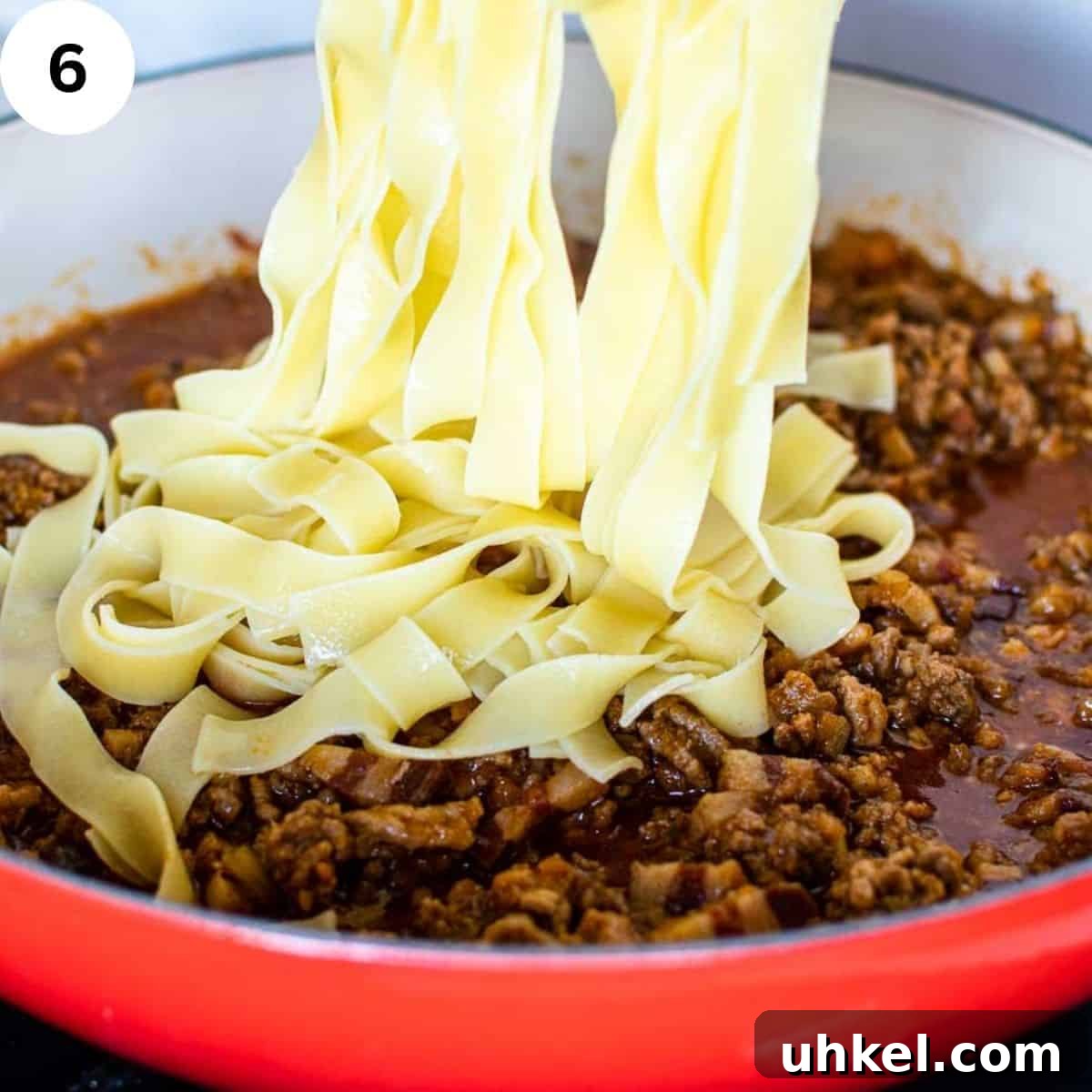
When the sauce is ready, bring a large pot of water to a rolling boil, salt generously and cook the tagliatelle according to package directions (or 1–3 minutes for fresh pasta). Reserve some pasta cooking water before draining.
Toss the hot tagliatelle with the Bolognese sauce, adding a little reserved pasta water if necessary to loosen the sauce so it coats the noodles evenly. Stir in a handful of grated Parmigiano Reggiano and serve with extra cheese at the table.
Tips for Success
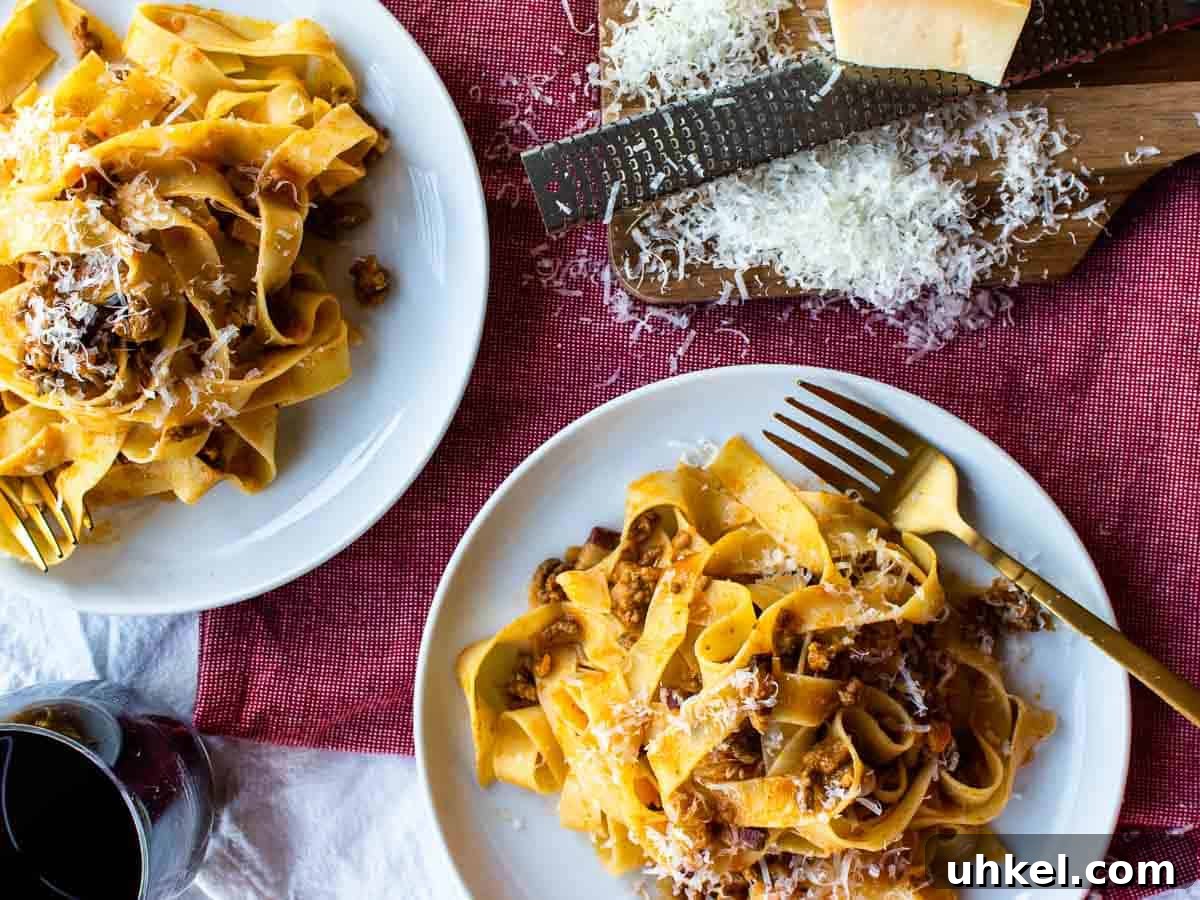
- Use a shallow, wide pan with a lid so the sauce reduces evenly.
- Chop the soffritto vegetables very finely so they melt into the sauce.
- Break up the ground meat by hand for the best texture and allow any released moisture to evaporate before adding wine.
- Let the wine and later the sauce reduce slowly; a gentle simmer is key—avoid boiling.
- Cook the pasta al dente so it holds up when tossed with the ragù.
FAQ
It means tagliatelle served with a traditional meat-based sauce originating from Bologna in the Emilia-Romagna region of Italy.
How do you pronounce tagliatelle alla bolognese?
Approximate pronunciation: “tahl-yah-TEL-leh ah-lah boh-loh-NYEH-zeh.”
Can you freeze tagliatelle alla bolognese?
The cooked pasta and sauce together do not freeze as well as the sauce alone. The Bolognese sauce freezes very well; prepare the sauce in bulk and freeze portions to combine later with freshly cooked pasta.
What to serve with Tagliatelle alla Bolognese
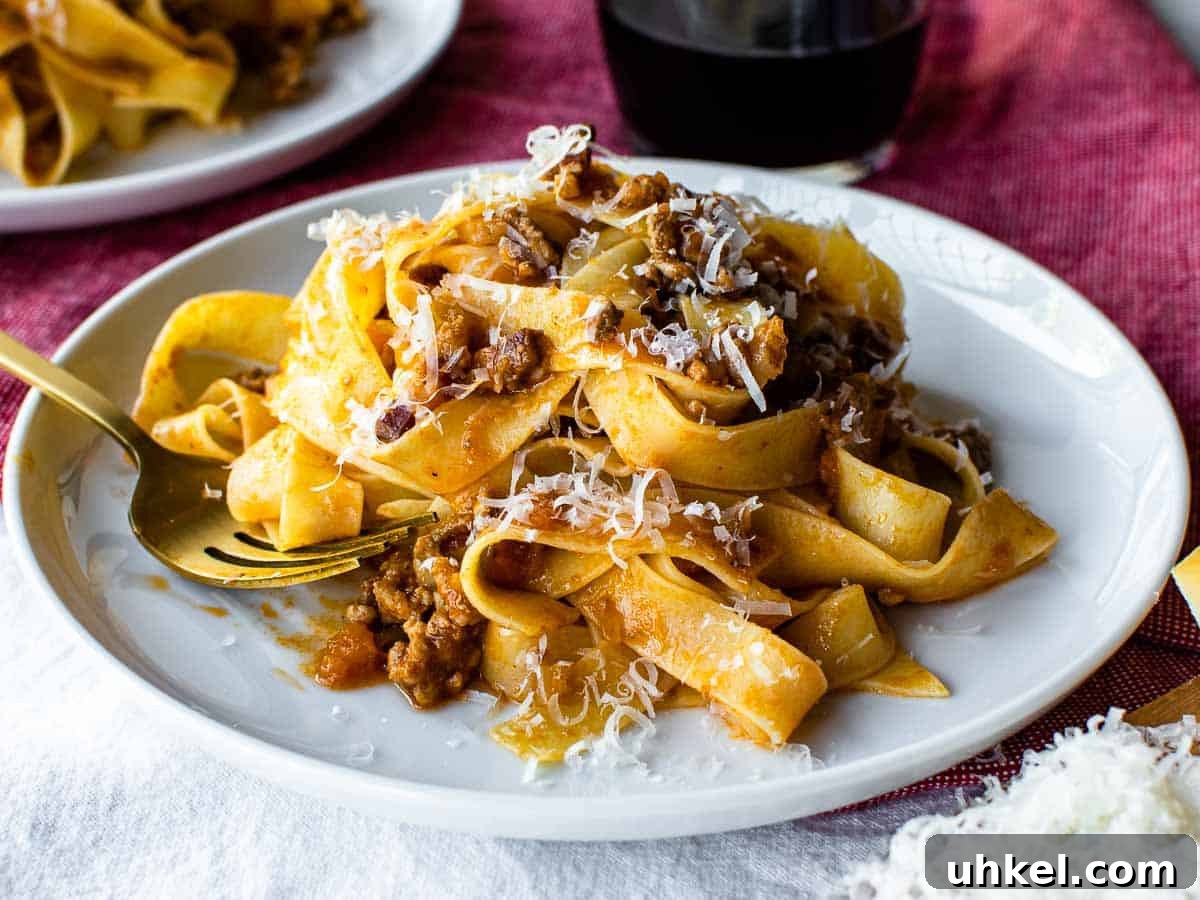
This dish is excellent simply served with plenty of freshly grated Parmigiano Reggiano and a crisp green salad. A loaf of crusty bread or a garlic ciabatta makes a welcome addition for mopping up sauce. For dessert, keep it light to finish the meal gracefully.
More recipes like this
Regional egg pastas, simple tomato sauces and baked or hand-made pastas pair naturally with the style and flavors of a good Bolognese. Try other traditional pastas from Emilia-Romagna or simple sauces based on San Marzano tomatoes and fresh basil to complement your home-cooked ragù.
Tagliatelle alla Bolognese Recipe
A slow-cooked Bolognese sauce of beef, pork and pancetta paired with perfectly cooked tagliatelle.
Ingredients
- 2 tablespoons extra virgin olive oil
- 3 tablespoons (45 g) salted butter
- 1 small onion, finely diced
- 1 carrot, finely diced
- 1 stick celery, finely diced
- 4 ounces (113 g) pancetta or bacon, diced
- 8 ounces (225 g) ground beef
- 8 ounces (225 g) ground pork
- ½ cup (120 ml) dry white wine
- 1½ cups (360 ml) beef stock
- 3 tablespoons tomato paste
- ½ teaspoon freshly grated nutmeg
- ½ teaspoon salt, or to taste
- ¼ teaspoon black pepper
- 1 pound (450 g) tagliatelle
- Finely grated Parmigiano Reggiano, to serve
Instructions
- Peel and finely dice the onion and carrot. Dice the celery and pancetta. Make sure the vegetables are chopped very small so they melt into the sauce.
- Heat a shallow casserole or large skillet over medium-low heat. Add the oil, butter, vegetables and pancetta and cook gently until softened and lightly golden.
- Break up the ground beef and pork with your hands and add to the pan. Brown the meat while breaking up any lumps and cook until most of the moisture has evaporated.
- Pour in the white wine and let it evaporate completely, stirring to deglaze the pan.
- Add the beef stock, tomato paste, nutmeg, salt and pepper. Stir to combine and bring to a gentle simmer.
- Reduce the heat to very low, cover and simmer for about 2 hours, checking occasionally and adding a little water if the sauce becomes too dry. Taste and adjust seasoning as needed.
- When the sauce is ready, bring a large pot of water to a boil. Salt the water generously and cook the tagliatelle until al dente.
- Reserve a cup of pasta water, drain the pasta, and toss the tagliatelle with the Bolognese in the pan or a large serving bowl. Add reserved pasta water if needed to achieve a smooth coating.
- Stir in a little grated Parmigiano Reggiano, transfer to serving plates and offer extra cheese at the table.
Notes
- Use a wide, shallow pan for best evaporation and flavor concentration.
- Chopping the soffritto finely ensures it blends into the sauce rather than remaining as distinct pieces.
- Simmer gently—too high a heat will dry the sauce or toughen the meat.
- The sauce freezes well; freeze portions of the ragù and combine with freshly cooked pasta when ready to serve.
Nutritional Estimate Per Serving
Calories and nutrient values vary by ingredients and portion sizes. The estimate for a generous serving is approximately: Calories 1185; Carbohydrates 89 g; Protein 38 g; Fat 72 g. For precise values, calculate using the exact brands and amounts you use.