Do you need to know how many ounces are in a cup? This clear guide explains the difference between fluid and dry ounces and includes practical conversion tables and examples to help you follow recipes in both metric and imperial systems.
Different measurement systems can make cooking and baking confusing. Many recipes mix metric and US units, which makes accurate measuring essential for consistent results.
This guide gives straightforward cup-to-ounce conversions, explains the difference between fluid and dry ounces, and provides helpful charts you can use when cooking or baking.
How many ounces in a cup
Here are the basic fluid ounce conversions for cups you’ll use most often.
How many fluid ounces in a cup: 1 cup to fluid ounces
- 1 US cup = 8 fl oz = 16 tablespoons
- 3/4 cup = 6 fl oz = 12 tablespoons
- 1/2 cup = 4 fl oz = 8 tablespoons
- 1/4 cup = 2 fl oz = 4 tablespoons
- 1 Imperial cup = 10 fl oz
How much is one fluid ounce: 1 ounce to cups
- 1 US fluid ounce = 0.125 US cup
- 1 Imperial fluid ounce = 0.1 Imperial cup
How many dry ounces in a cup
Dry ounces measure weight, so the number of ounces in a cup varies by ingredient. Examples (US measurements):
- 1 cup all-purpose flour ≈ 4.4 oz
- 1 cup brown sugar (packed) ≈ 7.05 oz
- 1 cup butter = 8 oz
- 1 cup leafy greens ≈ 16 oz (volume varies)
- 1 cup chocolate chips ≈ 5.6–6 oz
What is an ounce?
An ounce can measure weight (dry ounce) or volume (fluid ounce).
An avoirdupois ounce (used for most food weights) equals 28.35 grams. A troy ounce (used for precious metals) equals 31.10 grams. Fluid ounces measure liquid volume: 1 US fl oz = 29.57 ml; 1 Imperial fl oz = 28.41 ml.
What is a cup?
A cup is a common cooking measure. In US customary units, 1 cup = 1/2 US pint (≈237 ml). In the metric system, a standard metric cup = 250 ml.
How to convert cups to ounces
To convert cups to fluid ounces, use the appropriate factor for the system you’re using:
US fluid ounces = cups × 8
Imperial fluid ounces = cups × 10
Example: 2 US cups × 8 = 16 fl oz (US). 2 Imperial cups × 10 = 20 fl oz (Imperial).
Cups to fluid ounces
Quick reference: US cups to US fluid ounces.
| Cups | Fluid ounces |
|---|---|
| 1/4 cup | 2 fl oz |
| 1/3 cup | 2.67 fl oz |
| 1/2 cup | 4 fl oz |
| 1 cup | 8 fl oz |
| 1.5 cups | 12 fl oz |
| 2 cups | 16 fl oz |
How to convert ounces to cups
To convert US fluid ounces to US cups: divide ounces by 8. For Imperial fluid ounces: divide by 10.
Example: 1 fl oz ÷ 8 = 0.125 cup (US)
Example: 1 fl oz ÷ 10 = 0.1 cup (Imperial)
Fluid ounces to cups
Reference table: fluid ounces to cups (US).
| Fluid ounces | Cups |
|---|---|
| 1 fl oz | 0.13 cup |
| 2 fl oz | 0.25 cup |
| 4 fl oz | 0.5 cup |
| 8 fl oz | 1 cup |
| 16 fl oz | 2 cups |
Cups to dry ounces
Dry ingredient weights vary by ingredient. Here are common conversions in US measurements. For more ingredients consult a detailed baking conversion chart or use a kitchen scale for accuracy.
All-purpose flour
| Cups | Ounces | Grams |
|---|---|---|
| 1/4 cup | 1.1 oz | 31 g |
| 1/3 cup | 1.5 oz | 42 g |
| 1/2 cup | 2.2 oz | 63 g |
| 1 cup | 4.4 oz | 125 g |
Butter
| Cups | Ounces | Grams |
|---|---|---|
| 1/4 cup | 2 oz | 57 g |
| 1/3 cup | 2.7 oz | 76 g |
| 1/2 cup | 4 oz | 113 g |
| 1 cup | 8 oz | 227 g |
Measuring cups
There are several cup standards: US customary, Imperial, metric (250 ml), Canadian, Japanese, and others. Check the recipe’s measurement system before you start to avoid mistakes.
British vs. American measuring cups
Measurement names can be the same but values differ. For clarity:
1 metric cup = 250 ml
1 US cup ≈ 237 ml
Liquid measuring cups
Use liquid measuring cups with a spout for milk, oil, water, and other liquids. Measure on a flat surface and read at eye level for accuracy. Liquid ounces measure volume.
Dry measuring cups
Use dry measuring cups for flour, sugar, and other dry ingredients. Scoop, then level with a straight edge for most dry ingredients; pack firmly for brown sugar when a recipe specifies.
A kitchen scale gives the most accurate results and is recommended for baking.
How to fill liquid measuring cups
- Place the cup on a flat surface.
- Bend or crouch to eye level with the measurement markings.
- Pour until the liquid reaches the desired mark.
How to fill dry measuring cups
- Ensure ingredients are lump-free.
- Scoop into the dry measuring cup.
- Level off with a knife for an even measure, unless the recipe asks to pack the ingredient.
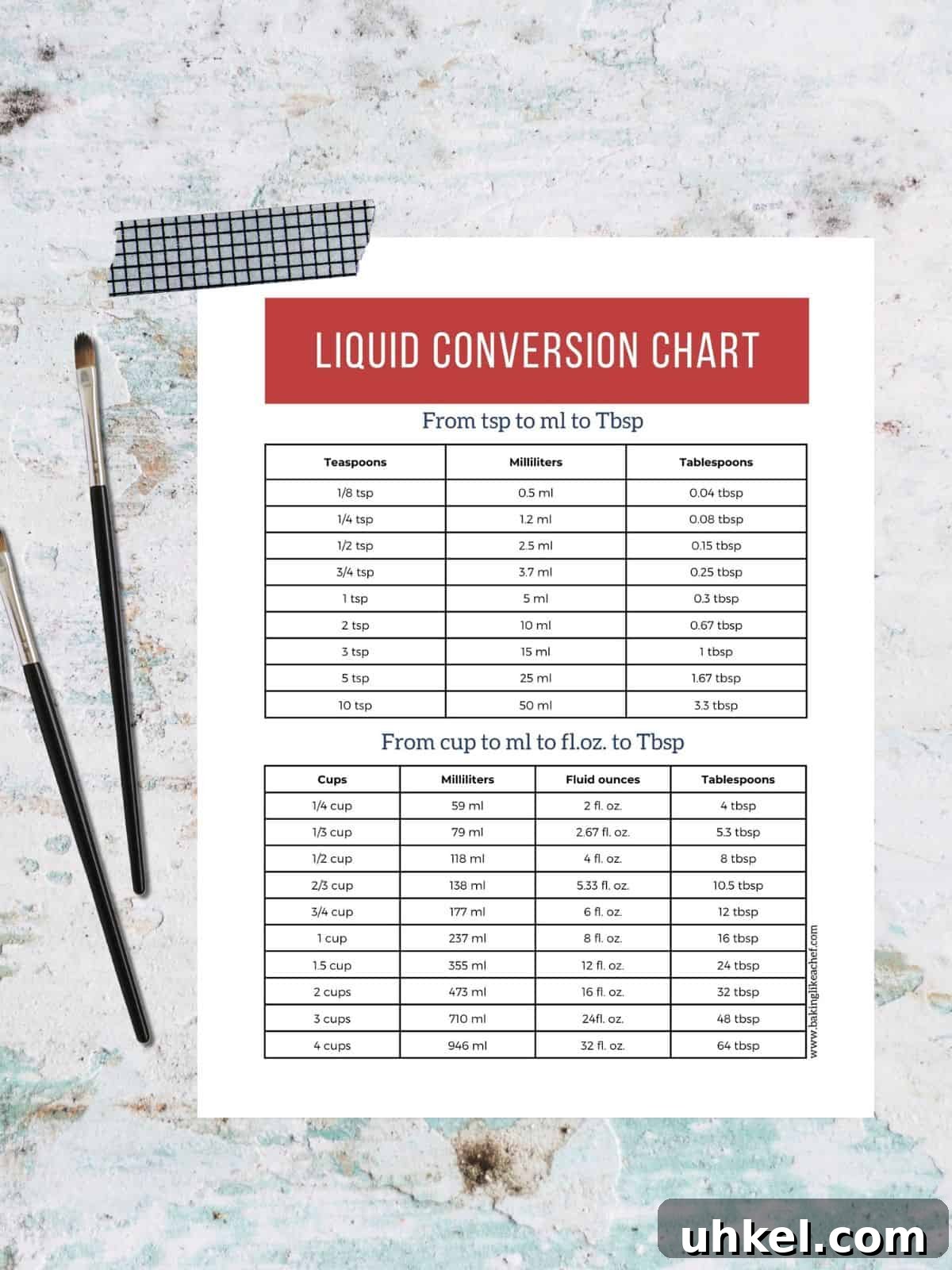
Liquid conversion chart printable
A printable liquid conversion chart can be a handy reference in the kitchen. It typically converts teaspoons, tablespoons, cups, fluid ounces, and milliliters for quick lookup.
More baking conversions
Other useful conversions include grams-to-cups, cups-to-grams, cups in a pint, and milliliters per teaspoon or tablespoon. A kitchen scale and conversion charts are helpful tools for reliable baking results.
Conclusion
When following recipes, remember: 1 US cup = 8 US fluid ounces. Dry ounce weights vary by ingredient, so use ingredient-specific conversion charts or a kitchen scale for precision. Keeping a printed conversion chart in your kitchen makes conversions quick and easy.
Essential measuring tools:
- Kitchen scale
- Liquid measuring cup
- Dry measuring cups
- Measuring spoons
FAQ
2 fluid ounces = 1/4 cup (US).
4 fluid ounces = 1/2 cup (US).
6 fluid ounces = 3/4 cup (US).
8 fluid ounces = 1 cup (US).
A cup of water contains 8 fluid ounces (US).
1 cup of butter = 8 ounces.
1 cup of all-purpose flour ≈ 4.4 ounces.