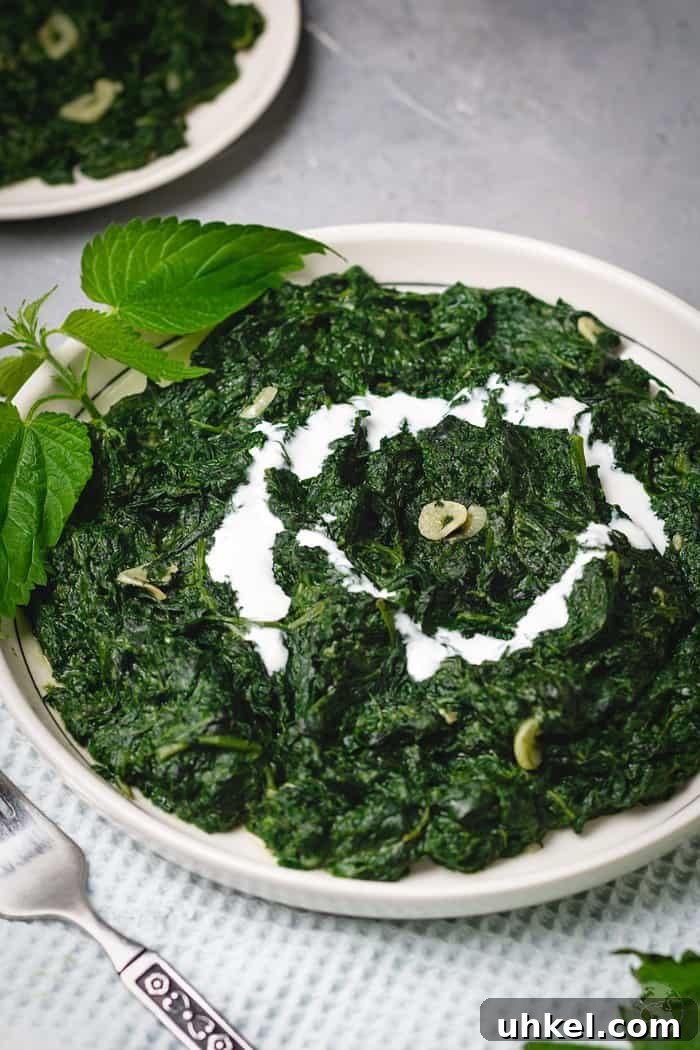
A simple, creamy stinging nettle side dish is an easy and flavorful way to add vitamins, minerals and protein to your meals. In this Balkan-style preparation, the cooked nettles are sautéed in butter with garlic, finished with a touch of nutmeg, and bound with a sour cream and milk mixture. It’s quick to prepare, nutritious, and genuinely delicious.
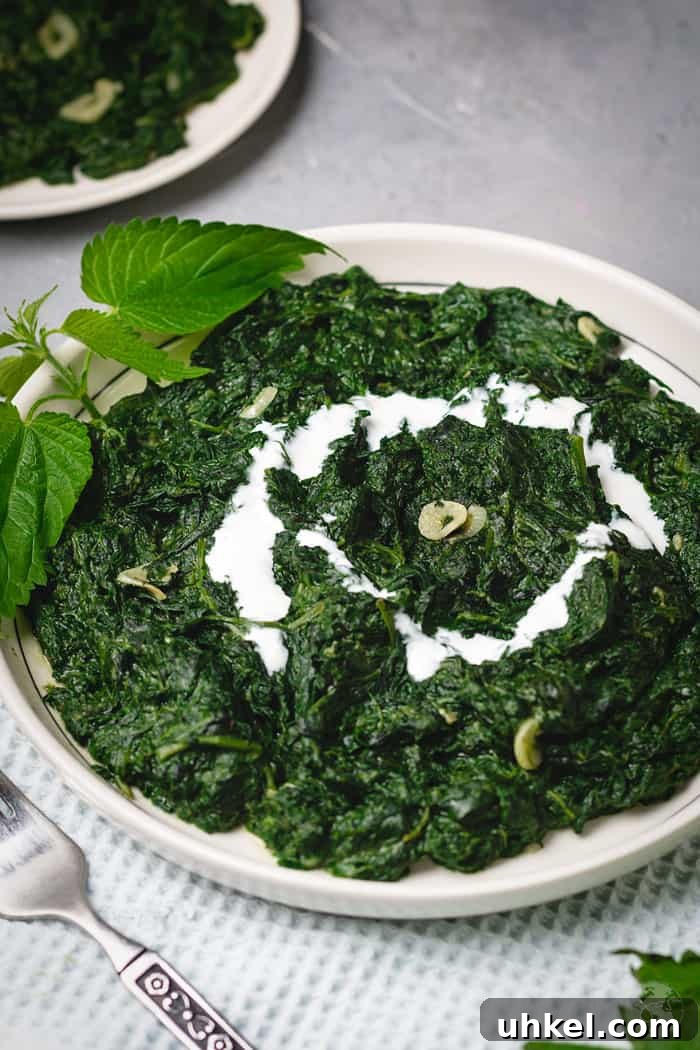
If the name “stinging nettle” gives you pause, don’t worry — the sting disappears once the leaves are cooked. Many traditional cuisines use nettles in spring dishes, and they can be treated much like spinach in recipes. I grew up eating nettles mixed with spinach; they have a robust, green flavor that stands up well to bold seasonings and creamy sauces.
What is Stinging Nettle?
Stinging nettle is a perennial wild plant recognized for the tiny hairs on its leaves that can cause a stinging sensation on bare skin. Historically it has been used for food, medicine, and fiber. Nutrient-dense and widely available in many temperate regions, nettles provide a strong nutritional profile including vitamins, minerals and plant-based protein.
Benefits of stinging nettle
Stinging nettle offers many traditional and supported benefits. It has anti-inflammatory and diuretic properties, and it is used in herbal treatments for joint discomfort and seasonal allergies. The plant also contains compounds with antimicrobial activity, and it is valued as a gentle detoxifier. Nettles are a source of iron, vitamin C, calcium and other minerals that support circulation, bone health and general wellness.
Nettle in cuisines
Think of nettles as a stronger-flavored spinach. Many cultures use nettles in spring soups, pies and stuffed pastries. In parts of Eastern Europe and the Balkans, nettles are often mixed with cheese as a filling for phyllo-style dough. In Northern Italy they appear in pestos and polenta, and in Scandinavia and Ireland they are commonly used in nettle soups. Nettles pair well with eggs, potatoes, cheeses, and other leafy greens.
Where to find and grow nettles
Originally native to Europe, stinging nettle has naturalized across much of North America. In spring you can find them along stream banks, ditches, fence lines, and on the edges of fields or woodlands. They are also easy to grow in a garden: nettles are hardy perennials that require little care once established.
Harvesting and handling nettles
Harvest young plants before they get too tall — about a foot in height — and take only the top two or three leaf pairs. Always protect your hands and legs while harvesting; wearing gloves and long sleeves prevents skin irritation. Place cut nettles into a paper or plastic bag for transport and prepare them promptly.
If you get stung
Contact with fresh nettles can cause redness, swelling and a burning or itching sensation that typically fades within a day. Wash the area with soap and water and avoid rubbing or scratching. Cooking neutralizes the stinging hairs, so nettles are safe to eat after boiling, steaming, or sautéing.
How to cook nettles
Cooking nettles is straightforward: trim leaves from stems, rinse thoroughly, then simmer or boil until wilted. The leaves can be sautéed with garlic and butter, blended into pestos, folded into omelets, added to pasta or casseroles, or used wherever you might substitute spinach or chard. The prickly hairs lose their sting once exposed to heat.
Scroll to the recipe below for a printable ingredient list and step-by-step instructions.
Creamy Stinging Nettle Recipe
High in vitamins, minerals and plant protein, this creamy nettle side is a classic Balkan preparation. Serve it alongside mashed potatoes, fish, roasted meats, or fried eggs.
Ingredients
- 1 pound stinging nettle, cleaned and rinsed
- 2 tablespoons butter
- 2 garlic cloves, sliced or minced
- 1 tablespoon all-purpose flour (substitute gluten-free if needed)
- ½ cup reserved nettle cooking liquid
- ¼ teaspoon ground nutmeg
- ⅓ cup milk
- 2 tablespoons sour cream
- Salt and freshly ground black pepper to taste
Instructions
- Bring a large pot of water to a boil. Add the cleaned nettles and cook until wilted, about 5–10 minutes. Reserve about ½ cup of the cooking liquid, then drain the nettles in a colander.
- In a large skillet over medium heat, melt the butter and add the garlic. Sauté briefly until fragrant, about 30 seconds.
- Whisk in the flour and cook until the mixture is smooth and slightly bubbly, about one minute.
- Add the drained nettles and the reserved cooking liquid. Simmer, stirring occasionally, until most of the liquid has evaporated and the nettles are well incorporated, about 10 minutes.
- In a small bowl, whisk together the milk and sour cream. Stir this mixture into the nettles, add nutmeg, and season with salt and pepper. Cook over medium heat until the sauce thickens, about 3–5 minutes.
- Finish with a swirl of sour cream if desired and serve warm.
Notes and tips
- Wear gloves while harvesting and handling raw nettles. Once cooked, nettles lose their sting.
- Only harvest young leaves; avoid flowering plants.
- Clean nettles by soaking in cold water and repeating a few times to remove grit.
- For a creamier, richer version, whisk in an egg with the milk and sour cream (temper the egg first to avoid curdling).
- If nettles are unavailable, substitute spinach or Swiss chard using the same method.
- Cooked nettle water can be saved and enjoyed as a nutrient-rich tea.
What to serve with creamy nettles
Creamy nettles complement roasted or pan-fried fish, roasted pork, schnitzel-style dishes, or simply fried eggs. They also pair nicely with mashed potatoes or crusty bread to soak up the sauce.
This simple dish honors a long culinary tradition and makes a healthy, flavorful addition to spring menus. Enjoy experimenting with nettles as a seasonal green in your kitchen.