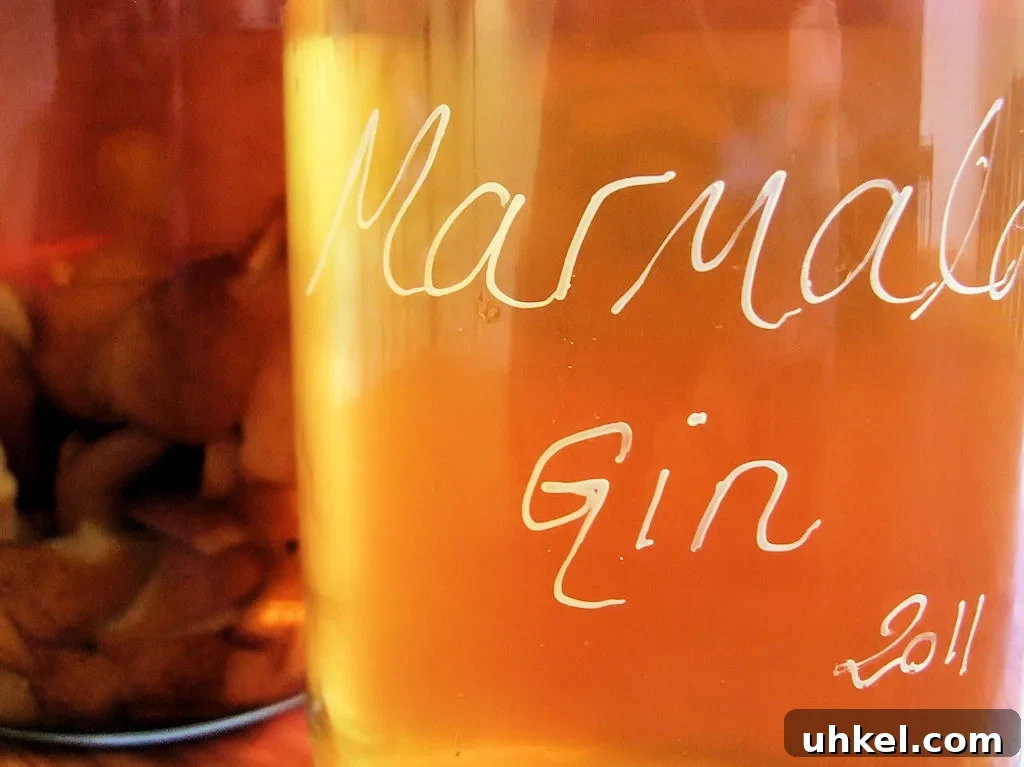
Last December, our friend Deborah drove over with roughly 50 pounds of oranges from her father’s grove in East Texas after we’d been talking about making homemade fruit liqueurs. I didn’t realize just how many oranges that would be. Unlike apples, peaches, or berries, oranges yield a more limited range of preserves and liqueurs per fruit, so we had to decide how best to use them. About half were sent to Bill to become marmalade, which left plenty for drinkable projects—freshly squeezed orange juice in pints was a welcome bonus.
There are many commercial orange liqueurs available—Curaçao, Grand Marnier, and Triple Sec among them—but making your own is far less expensive and deeply satisfying. Homemade liqueurs let you customize flavor, sweetness, and aroma, and they make excellent gifts. The basic idea is simple: fruit, spirit, sugar, and time. My version of orange gin liqueur is slightly different because it uses only the orange peel, not the fruit itself. Using peel concentrates the essential oils and yields a rich, deep orange-colored liqueur with a pronounced orange oil aroma and a delightful marmalade-like flavor. Because this recipe uses no fresh juice, I add water to balance the alcohol strength and round out the mouthfeel.
You can substitute another neutral spirit—vodka, for example—but I prefer gin because its botanical notes complement citrus so well. You don’t need an expensive bottle: choose a spirit you would drink on its own, because the character of the alcohol will carry through to the finished liqueur.
Ingredients
- 10 medium oranges, peeled
- 300 g (10 oz) cane sugar
- 700 ml (24 fl oz) gin—good quality but not necessarily premium
- 300 ml (10 fl oz) water
Method
Begin with a clean, wide‑mouthed preserving jar that holds at least 1 liter (34 fl oz). Sterilize the jar and lid by washing in hot, soapy water and rinsing well; you can also pour boiling water into the jar and let it sit to sterilize. Wash the oranges gently—avoid aggressive scrubbing so you don’t strip away the fragrant oils in the peel. Using a vegetable peeler or a sharp knife, remove the peel in strips, taking care to leave as much of the bitter white pith behind as possible.
Place the orange peel from the ten oranges into the sterilized jar. Add the gin, then the cane sugar and water. Gently swirl or stir the jar until the sugar is mostly dissolved. Seal the jar tightly and store it in a cool, dark place. Let the mixture infuse for at least three months; longer aging will improve the depth and complexity of the flavor. If you’d like a touch of warming spice, add three or four whole cloves to the jar at the start—this gives a subtle wintery note without overpowering the citrus.
After the infusion period, strain the liqueur through a fine sieve or cheesecloth to remove the peel and any sediment. Bottle the finished liqueur in clean glass bottles and label with the date. The finished Marmalady orange gin is versatile: serve it as an after‑dinner digestif, a pre‑dinner aperitif topped with soda, in cocktails where you want a bright citrus accent, or drizzle a little over vanilla ice cream for a simple, elegant dessert.
Removing the peel from an orange
Tips: use organic or unwaxed oranges if possible so you don’t introduce unwanted residues into the liqueur. If you prefer a sweeter result, add a little more sugar either during infusion or after tasting the strained liqueur; for a drier finish, reduce the sugar slightly. Store bottles in a cool, dark spot and enjoy within a year for the best flavor, though properly made peel‑based liqueurs can keep well for longer.