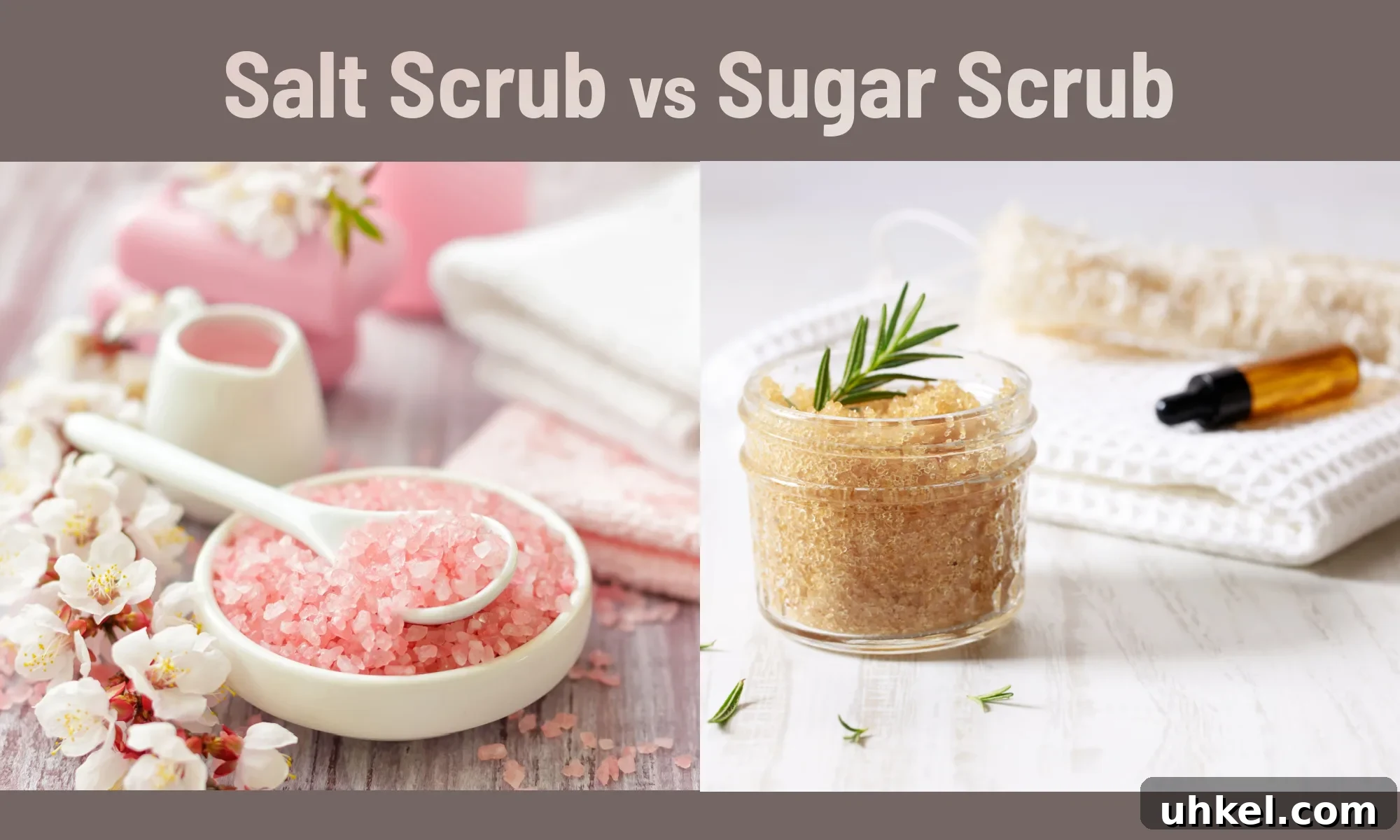
Exfoliation is a vital part of any skincare routine, yet it’s often skipped. Two common exfoliants are salt scrubs and sugar scrubs. Each has advantages and limitations, and the right choice depends on your skin type and needs. This article compares salt and sugar scrubs, outlines their benefits and drawbacks, and offers guidance for choosing the best option for your routine.
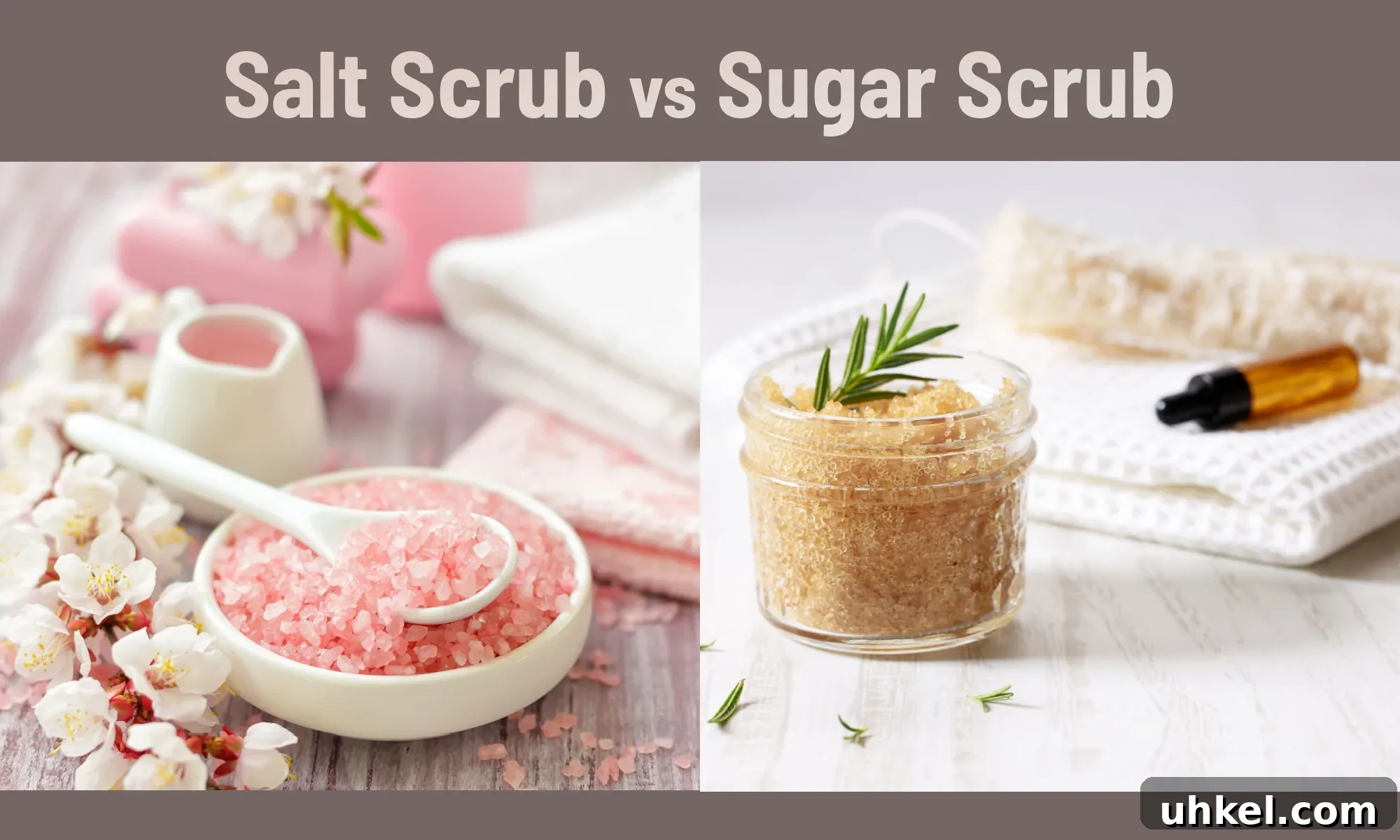
Salt scrub vs sugar scrub
The primary distinction between salt scrubs and sugar scrubs is the texture and size of the exfoliating particles. Salt scrubs use salt crystals—often coarser with sharper edges—while sugar scrubs use smaller, softer sugar granules. These differences influence how each scrub performs and which skin types they suit best.
| Salt scrub | Sugar scrub | |
| Exfoliating agent | Coarse salt crystals | Fine sugar granules |
| Skin sensitivity | Harsher, may irritate sensitive skin | Gentler, suitable for sensitive skin |
| Effectiveness | Effective at removing rough patches | Less effective on very tough, thick skin |
| Moisturizing | Can be drying if overused | Hydrating; sugar acts as a humectant |
| Additional benefits | Mineral-rich; may feel detoxifying | Contains glycolic acid; easy to customize with oils |
| Suitable areas | Body, feet, scalp | Body, face, hands, sensitive areas |
| Drawbacks | Potential for irritation and dryness | May have shorter shelf life; can be sticky |
Salt scrubs
Salt scrubs use natural salt varieties like sea salt, Himalayan salt, or Epsom salt as the main abrasive. Their larger, sharper crystals make them effective at removing dead skin and smoothing rough areas.
Benefits:
- Strong exfoliation: Coarse salt crystals remove dead cells and can help unclog pores, making salt scrubs useful on areas with thick or rough skin.
- Mineral content: Salts such as Epsom contain minerals like magnesium that some people find soothing.
- Soothing and anti-inflammatory: Salt can help reduce redness and calm irritated skin for some users.
- Revitalizing: The texture can promote circulation, leaving skin feeling refreshed.
Drawbacks:
- Too abrasive for sensitive skin: Coarse salt can cause irritation or micro-tears if used too vigorously, especially on delicate areas.
- Can be drying: Salt has a drying effect and may worsen dryness if used frequently without adequate moisturization.
- Not ideal for certain conditions: People with eczema, psoriasis, sunburn, or open wounds should avoid salt scrubs as they can aggravate these conditions.
Sugar scrubs
Sugar scrubs use granulated sugar—white, brown, or raw—as the exfoliating ingredient. Sugar particles are smaller and softer than salt, which affects how gently they remove dead skin.
Benefits:
- Gentle exfoliation: Sugar’s finer texture makes it suitable for sensitive skin and delicate areas, including the face.
- Humectant properties: Sugar draws moisture into the skin, helping maintain hydration and leaving skin feeling soft.
- Natural acids: Sugar contains small amounts of glycolic acid, which can help promote cell turnover and a brighter complexion.
- Customizable: Sugar scrubs blend well with oils, butters, and natural additives, so they are easy to tailor for specific skin concerns.
Drawbacks:
- Less intense exfoliation: Sugar may not remove heavier dead skin buildup as effectively as salt on very rough areas.
- Shelf life concerns: If water or contaminants enter the container, sugar-based scrubs can spoil faster than salt-based ones.
Salt scrub vs sugar scrub: The ultimate verdict
Overall, sugar scrubs tend to be a better fit for most people because they provide gentle exfoliation while helping maintain skin moisture. They’re especially appropriate for sensitive skin, facial use, and general daily maintenance.
Salt scrubs are a strong choice for targeted use on very rough or congested areas—feet, elbows, and sometimes the scalp—where more vigorous exfoliation is needed. Because of their abrasive nature, salt scrubs should be used less frequently and with care.
Alternating scrubs based on your skin’s needs can be an effective approach: use sugar scrubs for regular, gentle maintenance and salt scrubs occasionally for tougher patches. Always follow exfoliation with a hydrating moisturizer and avoid scrubs on broken or inflamed skin.
FAQs
It depends on your skin and goals. Salt scrubs are ideal for exfoliating rough patches and detoxifying, while sugar scrubs are gentler and better for sensitive skin and facial areas.
Salt scrubs are intended to remove dead skin cells and impurities, improve skin texture, and stimulate circulation for a refreshed appearance.
Sugar scrubs may be too gentle for very rough skin and can spoil more quickly if contaminated with water. People with certain skin conditions should patch-test before regular use.
Salt scrubs can be beneficial when used appropriately—especially for removing tough, dead skin—but they should be used sparingly and avoided on irritated or compromised skin.